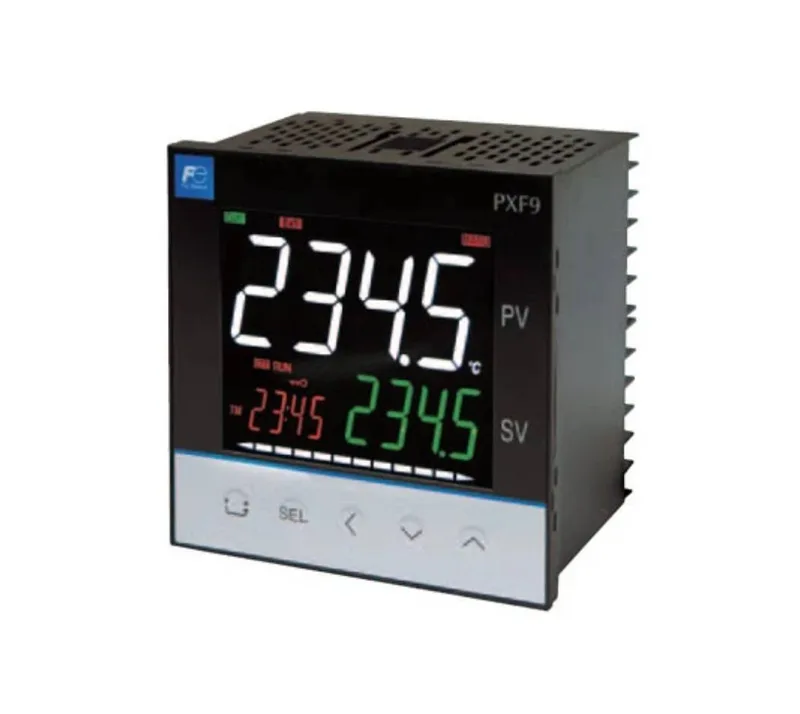
50ms sampling in a 1/4 DIN footprint
The PXF9APC2-0BMA1: The 50ms sampling speed is the defining real-time spec — it closes the loop on fast thermal processes (injection molding, reflow ovens, extruder zones) where a standard 100ms or 200ms controller would lag behind the process transient. The 1/4 DIN (96 x 96mm) panel cutout is the standard slot size for a single-loop controller; it fits the existing panel punch without adapter plates. Self-tuning means the controller auto-adjusts PID parameters during startup or after a setpoint change, reducing commissioning time on multi-zone lines. For an automotive Tier-1 supplier running a heat-treat or curing oven, this eliminates manual PID tuning across zones and keeps the process capability index (Cpk) consistent during the PPAP run.
The 96 x 96mm faceplate and 1/4 DIN depth fit standard panel cutouts. No special DIN-rail adapter or sub-panel is required — the controller clamps into the panel cutout with the supplied bracket. Terminal blocks on the rear accept power, sensor input (thermocouple, RTD, or analog), and control output (relay, SSR drive, or 4-20 mA).