What the 300 mm through-beam range means for your line
The E3C-S30T 2M is a compact-head through-beam photoelectric sensor with a 300 mm sensing distance — that's the gap between the emitter and receiver, not the distance to a reflective target. Through-beam gives you the most reliable detection of any photoelectric method because the beam is broken, not reflected, so it handles dust, misalignment, and target angle better than retroreflective or diffuse sensors. The emitter has a 10–40° detection angle, which means the beam spreads slightly as it travels. At 300 mm, the beam spot at the receiver is wider than at close range, so the sensor can tolerate some vibration or thermal expansion in the mounting brackets — but the narrower the angle you set, the tighter the alignment tolerance. Plan for a two-person alignment during commissioning: one to aim the emitter, one to watch the receiver's output indicator.
Where this sensor fits and where it doesn't
IP60 means the housing is dust-tight but not protected against water ingress — no washdown, no condensation, no outdoor installation without an enclosure. This sensor belongs inside a dry cabinet, conveyor tunnel, or guarded machine cell where the environment stays clean. The polycarbonate case and lens resist impact and most industrial oils, but the lens will fog if exposed to steam or high-humidity cycling. Below -25 °C the polycarbonate becomes brittle and the IR LED output drops; above 70 °C the electronics drift and the lens may soften. If your line runs near an oven or freezer, check the ambient at the mounting point, not the control cabinet.
Cable and mounting — what the 2m pre-wire means
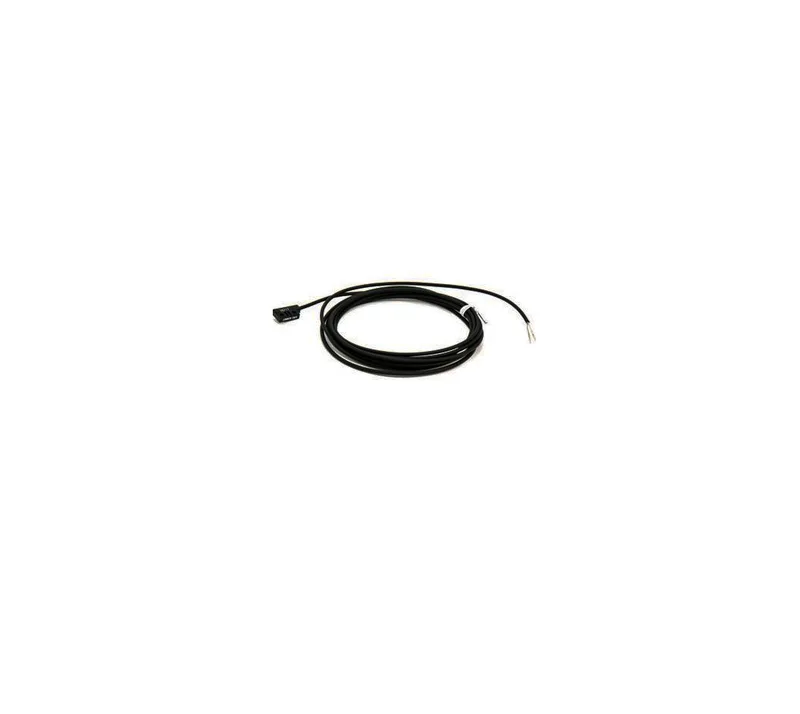
The 2 m pre-wired cable is factory-attached and sealed — no connector to lose or mis-wire, but also no way to replace the cable if it gets pinched or cut. Plan your cable routing before you bolt the sensor down; leave a service loop so you can pull the sensor out of the bracket without stressing the cable gland. If you need longer reach, you'll need a junction box or a flying-lead splice rated for the sensor's 24 VDC supply. The compact head design — roughly the diameter of a marker pen — fits into tight spaces where a standard M18 barrel sensor won't go. But the small size also means the mounting bracket needs to be rigid; a flimsy L-bracket will let the emitter and receiver drift out of alignment with machine vibration.
Lifecycle and sourcing — what 'mature' means for your spares plan
Sourced through independent distribution channels against an RFQ. If you're filling a critical line-down need, we can check open-market availability same day.