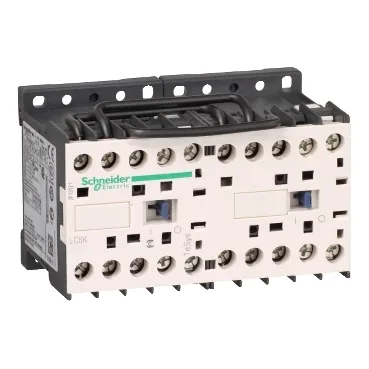
It's a 3-pole device rated for AC-3 duty at 9 A up to 440 V, with a 230 V AC coil and one normally-open auxiliary contact. The utilisation categories cover AC-1 (resistive loads like heaters), AC-3 (squirrel-cage motors), and AC-4 (plugging/inching duty). For a reversing contactor, AC-4 matters because reversing involves stopping and restarting against a running load — that's harder on the contacts than a simple start. If your application involves frequent reversing or jogging, the AC-4 capability is what you're actually buying.
Lifecycle reality — this part is obsolete
If you need a drop-in replacement with the same footprint and busbar arrangement, you'll need to cross-reference the TeSys K series manually — the LC8K0910P7's 57 mm depth and 90 mm width define the panel space it occupies, so any substitute must match those dimensions to avoid rework.
Mechanical robustness for industrial environments
The contactor is tested for shock and vibration per IEC 60068-2-27 and IEC 60068-2-6. With the contacts closed, it withstands 10 Gn on the X axis and 15 Gn on Y and Z axes for 11 ms shocks. Vibration resistance is 4 Gn from 5 to 300 Hz when closed. These numbers matter for applications on mobile equipment, conveyor systems with high impact loads, or anywhere the panel sees mechanical stress — the contactor won't drop out or weld shut under those conditions.