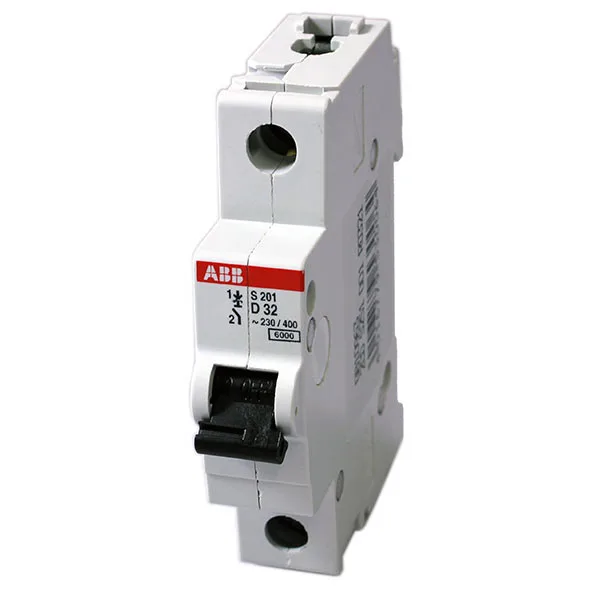
It's a UL 1077 supplementary protector, so it's not a service-entrance main breaker but rather a branch-circuit component inside a control panel or downstream of a listed branch-circuit overcurrent device.
Rated for 277 VAC line-to-neutral on a 480Y/277 V system, or 60/110 VDC for DC control circuits.
Curve D trips magnetically at 10–20 times rated current (20–40 A for this 2 A breaker), compared to Curve C at 5–10x. That wider magnetic trip band is what lets it ride through the inrush of a small motor, a DC power supply's input capacitor bank, or a control transformer without dropping out. But it also means the breaker won't protect a resistive load against a modest overload as quickly — the thermal element still handles the long-time region, but for short-circuit protection, the fault needs to be high enough to push into the magnetic zone. If your load is purely resistive (heaters, incandescent lamps), a Curve C or B would be a better fit.