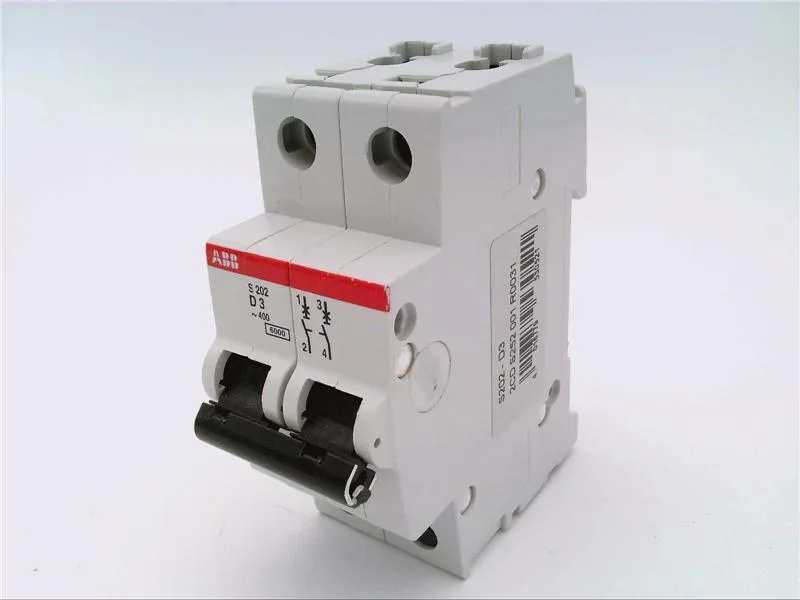
ABB S202-D3 — 2-Pole MCB (DIN Rail)

ABB S202-D3 MCB 2P D 3A 277V AC, 6kA

MPNS202-D3

ABB S202-D3, 2-pole miniature circuit breaker, Trip Curve D, 3 A, 277 V AC, 6 kA interrupting capacity, DIN rail mount.

$10.97Ref. price · indicative, final on quote
Sourced new & surplus through independent channelsAuthenticity-screened · ESD-safe packingListing updated Aug 2026

Specifications

S202-D3 — Specifications
ParameterValue
Amps3
TypeTrip Curve D
Poles2
MountingDIN Rail
Volts AC277
Breaking capacity6 kA

Product details

The ABB S202-D3 is a 2-pole miniature circuit breaker with a Trip Curve D characteristic, rated 3 A at 277 V AC. The Trip Curve D means the magnetic trip threshold is 10 to 20 times the rated current (30–60 A), designed for loads with high inrush like small motors, transformers, or solenoid banks. On a 277 V line-to-neutral system (common in North American commercial lighting panels), the 6 kA interrupting rating tells you it can safely clear a fault up to 6,000 A without welding its contacts or venting arc gas into the enclosure. That's adequate for most downstream panelboards with available fault current under that number — but verify your point-of-supply SCCR before committing the BOM line.

Panel integration

The 2-pole width (two modular units, 36 mm) fits existing distribution boards without re-drilling. Wire terminals accept up to 25 mm² conductor; torque to 2.5 Nm per the marking on the terminal clamp. No special busbar or adapter needed for a standard 2-pole comb bus.

Frequently asked questions

What does Trip Curve D mean on this breaker?

Trip Curve D means the magnetic trip operates at 10 to 20 times the rated current — 30 to 60 A for this 3 A breaker. That's intended for loads with high inrush like small motors, transformers, or discharge lighting, where a C-curve would nuisance-trip on startup.

Will the S202-D3 drop into a panel built for an S202M-C10?

Physically yes — same 2-pole DIN-rail footprint, same terminal layout, same busbar compatibility. The functional difference is the trip curve: D-curve (10–20x In) vs C-curve (5–10x In). If the circuit was originally designed for a C-curve, swapping to D-curve changes the coordination and may not provide the same protection for the connected load. Verify the load type before substituting.

Where can I buy the S202-D3 and get current pricing?

Sourced and quoted to order against an RFQ through independent distribution. Availability and current pricing are confirmed at quote time — submit an inquiry for the latest lead time and price.

MPN
S202-D3