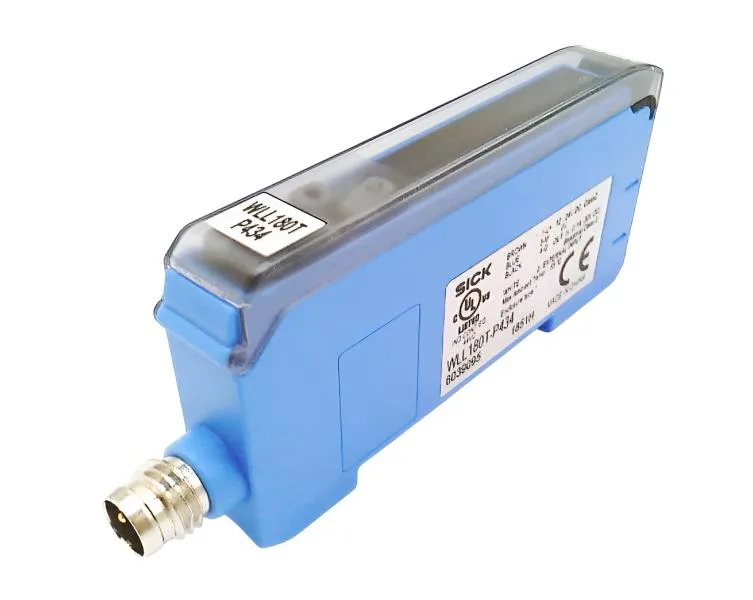
Fibre optic sensor for tight spaces and fast detection
The SICK WLL180T-P434 is a fibre optic sensor from the WLL180T series, designed for applications where the sensing head must be remote from the electronics. Its 16 µs response time catches fast-moving parts on a high-speed line — think small parts counting, edge detection on a web, or registration mark sensing at cycle rates where a standard photoelectric would blur the signal. The 10.5 mm body width fits into a DIN-rail mounting footprint that's tight on panel space; you can pack several units side by side without crowding the gland plate. The M8 4-pin connector keeps wiring clean and avoids the loose-fibre risk of a pigtail. Output is PNP (sourcing), light/dark ON switchable, so it mates directly to most PLC input cards without a pull-up resistor. Supply range is 12–24 VDC, which covers the standard control voltage in industrial panels.
The 16 µs response time is the headline spec here — it's roughly 30× faster than a typical 500 µs photoelectric. That speed matters when you're detecting parts at line speeds above 2 m/s or resolving features smaller than a few millimetres. The visible red LED (660 nm typical) makes alignment visible to the naked eye, so setup doesn't need a separate alignment tool. IP50 means the sensor body is protected against dust ingress but not against water jets or immersion. That's fine for a dry cabinet or enclosed machine frame; it's not rated for washdown zones or outdoor use. If the application sees coolant splash or condensation, you'd want an IP67-rated fibre optic amplifier instead. The fibre cable itself may have a wider range, but the amplifier is the thermal bottleneck.
Integration notes
The 10.5 mm width means it occupies one standard module position — you can fit roughly 8 units in a 100 mm span. The M8 connector exits the bottom, so leave clearance below for the mating cable. The fibre optic cables (not included) are ordered separately based on sensing distance and environmental requirements. The WLL180T accepts standard 2.2 mm diameter plastic fibre or 1.0 mm glass fibre — verify the fibre type against your application's bend radius and temperature needs.