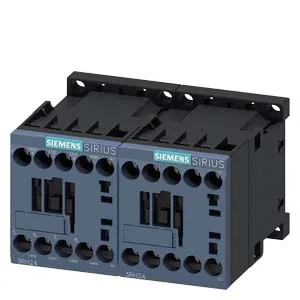
What the contact ratings mean for your circuit
The contact ratings are given per voltage, not as a single blanket ampacity. At 24 V rated value it handles 10 A; at 60 V it's 4.7 A; at 110 V it's 3 A; at 220 V it's 1.2 A; at 230 V it's 10 A; at 400 V it's 3 A; at 440 V it's 0.5 A; at 500 V it's 2 A; at 600 V it's 0.26 A; at 690 V it's 1 A. That 10 A at 230 V is notable — it matches the common control voltage for many European panels. The drop at 600 V to 0.26 A tells you this contactor is not built for high-voltage switching; keep it on 24–230 V control circuits where it earns its keep.
Mechanical life and arcing time
Rated mechanical life is 5,000,000 operations typical for the contactor — that's a solid five million cycles before the mechanism wears out, not the contacts. For a control relay that might cycle every few seconds on a packaging line, that DC switching rate means it can handle fast pick-and-place or sorting applications without overheating the coil.
Dimensions are 57.5 mm high, 90 mm wide, 73 mm deep — the depth is the key number for enclosure clearance behind the DIN rail.