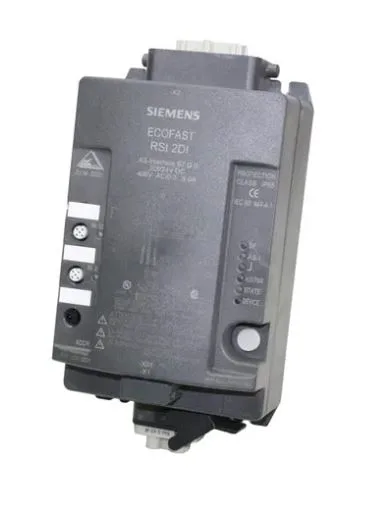
It communicates and receives power via the AS-Interface bus — the supply voltage comes through AS-I shaped cables using the cutting/clamping method, same for the communication transmission. This means the unit is wired directly into the AS-I flat cable, no separate control wiring run. The operating voltage range is 400 to 500 V for the main power circuit. This makes it suitable for placement directly on the machine or in washdown zones, not tucked away in a separate cabinet. The housing measures 130 mm wide, 250 mm high, and 91 mm deep.
Motor protection and control features
Motor protection is handled by a thermistor input — the starter monitors motor winding temperature directly via a PTC thermistor, rather than relying on a bimetallic overload relay. This gives better thermal matching to the motor, especially under frequent starting or reversing cycles. The unit also includes brake control for 400 V AC, which is common for mechanical brakes on hoists or vertical-axis conveyors. The reversing starter has two digital inputs, both via M12 sockets, and no digital outputs. The inputs are parameterizable, meaning you can configure their function (e.g., start/stop, direction select) through the AS-Interface master. The switching contacts are mechanical, so expect a finite electrical life under the AC-3 load curve.
Integration notes
The load-side outgoing feeder and main energy infeed both use sockets according to ISO 23570 — this is a standardized interface for pre-wired motor starters in the Siemens AS-Interface system. The supply voltage line-side connection uses the AS-I flat cable cutting/clamping method, so no separate power wiring is needed. Device addressing is done via a front addressing socket, which is typical for AS-Interface slaves. The unit has no PROFINET or PROFIBUS DP protocol support — it's strictly an AS-Interface device. If your control architecture is based on PROFINET, you'd need a gateway to integrate this starter into the network.