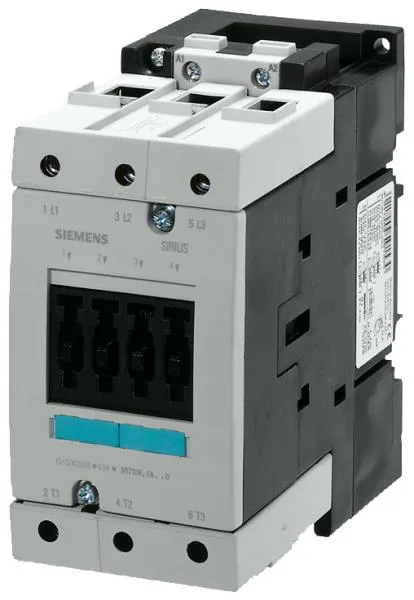
At 500 V it carries 45 kW, and at 690 V it carries 21.1 kW, so the same unit covers 400 V and 690 V line supplies without derating the motor frame. The main current circuit uses screw-type terminals, accepting stranded conductors from 10 to 50 mm². That terminal range covers most motor branch circuits up to 45 kW without needing adapter lugs.
The front face carries an IP20 rating with the cover or box terminal installed, which meets the finger-safe requirement for operator-access areas. The terminal body itself is IP00, so keep that inside the enclosure.
Switching performance and life
Maximum switching frequency varies by duty: 900 cycles/hour at AC-1 (resistive), 1000 cycles/hour at AC-3 (squirrel-cage motor start/run), and 300 cycles/hour at AC-4 (plugging or inching). The AC-3 rate of 1000 cycles/hour is the one you'll reference for most conveyor or pump cycling — it's fast enough for frequent start-stop sequences without exceeding the thermal limit. Arcing time is 10 to 15 ms, and the contactor withstands shock at 10.6 g for 5 ms and 6.2 g for 10 ms on AC. DC dropout delay runs 14 to 20 ms — relevant if you're coordinating with a safety relay or PLC output that needs to see the contactor drop within a known window.