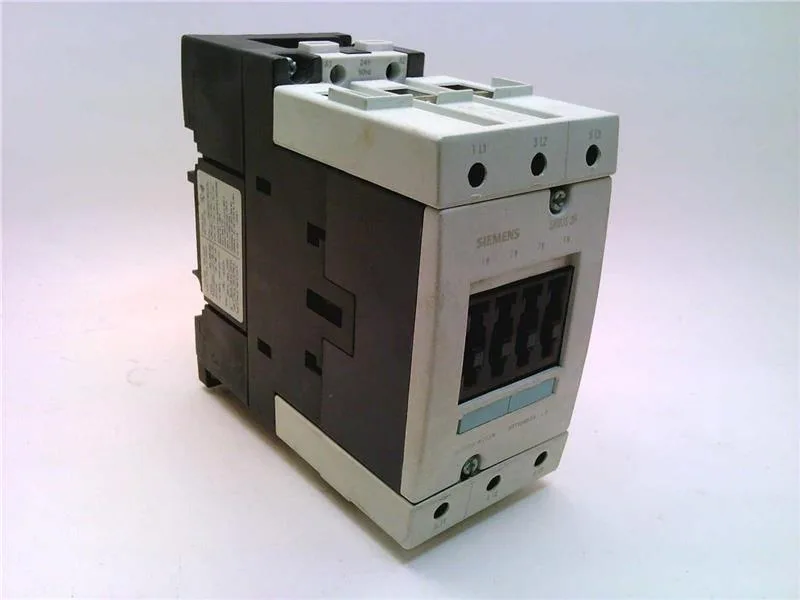
It carries a 24 VDC coil, which means you pull control power from a standard 24 VDC supply — no separate AC coil transformer needed. The screw-type terminals on the main circuit accept stranded conductors up to 2x 50 mm², sized for the motor feeder cable on a 45 kW load at 400 V AC-2 duty. Rated 45 kW at 400 V AC-2 (slip-ring motor starting) and 80 A at 400 V AC-4 (plugging/reversing/inching duty), this contactor handles the high-stress switching cycles that wear out a general-purpose contactor fast. The mechanical life of 10,000,000 operations means it outlasts the panel's service life under normal cycling.
Snap-on mounting onto 35 mm or 75 mm DIN rail. The S3 footprint is 70 mm wide, 146 mm tall, and 201 mm deep. Side-by-side mounting is permitted. IP20 on the front with the cover or box terminal installed; the terminal area itself is IP00. That's standard for enclosed panel mounting — the enclosure door provides the environmental seal.
Switching frequency and thermal limits
Maximum switching frequency varies by duty: 900 cycles/hour for AC-1 resistive loads, 850 for AC-3 motor starting, 350 for AC-2, and 250 for AC-4 plugging duty. That's the thermal limit of the contactor — exceeding it will overheat the coil or arc chamber.
The built-in auxiliary contacts (one NO, one NC typical for this frame) are rated for switching at various control voltages: 10 A at 24 V, 2 A at 60 V, 1 A at 110 V, 0.3 A at 220 V, 6 A at 230 V, and 3 A at 400 V. These are the DC switching limits for the auxiliary circuit — use them for PLC inputs or relay coils, not motor loads.
RoHS compliance date is May 1, 2012, meaning it meets the EU restriction on hazardous substances for equipment placed on the market after that date. No UL or CSA listing is explicitly stated in the spec record, but as a Siemens SIRIUS component it typically carries those marks — verify the specific nameplate for your jurisdiction.