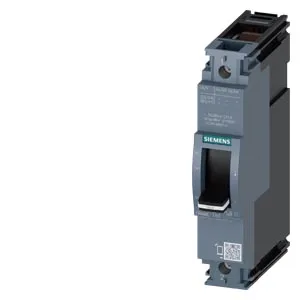
The Siemens 3VA1163-5MH32-0DC0 is a 3-pole IEC frame 160 circuit breaker with a 55kA breaking capacity at 415V, rated at 63A. It's built for motor starter protection using a TM120M release, meaning it handles the high inrush of a motor start without nuisance tripping, then clears a short fast. The short-circuit protection is adjustable from 5 to 15 times the rated current (Ii=5...15 x In), so you can dial it in for the motor's locked-rotor draw. Note there's no built-in overload protection—this breaker is the magnetic-only short-circuit half of a starter combo; you pair it with a separate overload relay for thermal protection.
That's a Class M rating—high enough for most industrial distribution boards fed by a transformer of moderate size. The TM120M release is a thermal-magnetic type with a fixed thermal curve (the '120' is the frame designation, not a trip setting), so it's not adjustable for overload; that's why the description says 'without overload protection.' In a motor starter panel, this breaker sits upstream of the contactor and overload relay. The undervoltage release (UVR) will trip the breaker if control voltage drops below about 70% of 208-230V AC, which is common for emergency-stop circuits or to prevent auto-restart after a power dip. The two auxiliary switches (HQ) are form-C contacts rated for pilot duty; they'll tell your PLC whether the breaker is open or closed.
Deployment Context
The nut keeper kit holds the terminal screws captive, which saves time during panel wiring—no dropped hardware. The UVR coil draws a small continuous current (typically under 5 VA) when energized; factor that into your control transformer sizing if you're running several of these. The two auxiliary switches are wired separately from the main power circuit, so they can be used for status to a safety PLC or a simple indicator lamp.