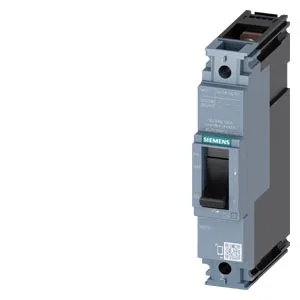
The TM220 overcurrent release provides LI protection (long-time and instantaneous), with overload protection Ir adjustable from 88 A to 125 A and short-circuit protection Ii fixed at 10 x In. That means you set the thermal pickup to match your load cable or transformer feeder, and the magnetic trip holds at 1250 A — no ground-fault module here, so this is a straight line-protection breaker for feeders or main incomers where GFCI is handled downstream.
Rated continuous current holds at 125 A from 40 °C through 50 °C ambient, then derates to 122 A at 55 °C and 120 A at 60 °C. That 5 °C window between 50 °C and 55 °C is where a panel builder needs to check the internal enclosure temperature — if your cabinet runs hot from drives or transformers, the 3 A drop at 55 °C is small but real. At 70 °C it still carries 114 A, which is better than many MCCBs in this frame class. That IP40 is typical for switchboard mounting — it keeps tools and fingers out but isn't rated for washdown.