What it is and what the ratings mean
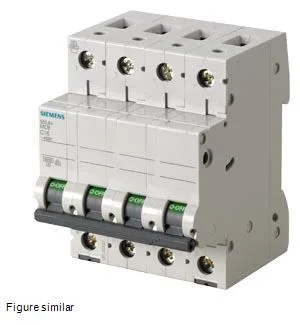
The Siemens SENTRON 5SL6463-7RC is a 4-pole miniature circuit breaker rated 63 A with a C tripping characteristic and a 7.5 kA breaking capacity per EN 60898 at 415 V AC. The C-curve trips between 5 and 10 times rated current, so it handles moderate inrush from motor starters and small transformers without nuisance trips — a common choice for general-purpose distribution in residential and infrastructure builds. The 7.5 kA rating means it can safely interrupt a fault current up to that level at the panel; if your available fault current is higher, you need upstream current-limiting or a higher-rated breaker. The 4-pole design switches all three phases plus neutral, which is standard for three-phase distribution panels in most jurisdictions. It occupies 4 modular width units on a DIN rail — that is 72 mm of rail space. Mounting position is any, so it fits vertical or horizontal busbars without derating. The IP20 rating with connected conductors means it is protected against finger contact but not water ingress — standard for enclosed panel mounting, not outdoor or washdown locations. Rated for overvoltage category III and pollution degree 2, the breaker is suited for fixed installations in building distribution boards where transient overvoltages from the mains are expected. The operating temperature range of -40 °C to 75 °C covers most indoor and sheltered outdoor enclosures. Power loss per pole at rated current in hot operating state is 4.4 W, which adds up to about 17.6 W total for the 4-pole assembly — factor that into enclosure thermal calculations if the panel is densely populated.
Panel fit and integration
The breaker snaps onto a standard 35 mm DIN rail. Depth is 76 mm, installation depth 70 mm — verify enclosure depth clearance if you are retrofitting into a shallow panel. The 72 mm width and 90 mm height match the SENTRON modular footprint. Sealable means the toggle can be locked in the off position with a padlock hasp for lockout/tagout. Halogen-free and silicon-free construction matters for environments where outgassing during a fault could contaminate sensitive equipment or where silicone contamination affects downstream coatings or adhesives.