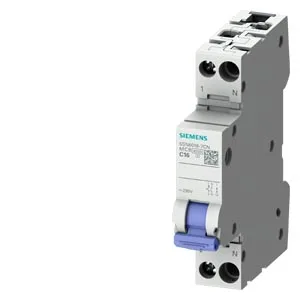
The Siemens SENTRON 5SN6016-7CN is a 1-pole-plus-neutral miniature circuit breaker (MCB) in the compact form factor, rated 16 A with a C tripping curve and a 6 kA breaking capacity at 230 V AC per IEC/EN 60898-1. It switches the neutral conductor as well, so it's a true 1P+N unit — not just a switched-neutral accessory.
The 16 A rating with C-curve (magnetic trip at 5–10× In) handles motor starting and capacitive loads without nuisance tripping, while still protecting the cable. The 1P+N design with neutral switching means the neutral pole opens and closes with the line, which some local wiring codes require for single-phase final circuits. The 18 mm width (1 modular unit) is the standard DIN-rail footprint — it clips onto the rail and occupies one slot, leaving room for adjacent breakers or accessories. The 76 mm depth and 90 mm height fit within typical distribution board enclosures. Ambient temperature derating applies: full rated current up to 45 °C at 85% relative humidity; between 45 and 60 °C the humidity limit drops to 43% rF. Above 60 °C the breaker must be derated per the manufacturer's curve — not a concern in most indoor panels but worth checking if the enclosure sits near a heat source.
Panel integration
Snap-on DIN-rail mounting per EN 60715, any orientation.