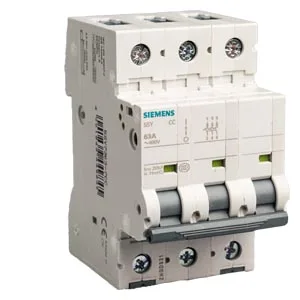
It is rated 400 V AC (440 V max in single- or multi-phase operation) and 72 V DC maximum. The breaking capacity is 10 kA per EN 60898 and 5 kA per UL 1077 / CSA C22.2 No.235 — the UL figure governs installations in North American panels, while the EN figure applies across IEC markets. That split matters when you are coordinating downstream branch protection: the 10 kA IEC rating gives headroom in most European distribution boards, but if your BOM calls for UL 489 or UL 1077 compliance, the 5 kA at 400 V is the limiting number for fault-current calculations. The C-curve (trips at 5–10× rated current) suits general-purpose loads — lighting, small motor circuits, control transformers — where inrush is moderate and nuisance tripping from brief surges is not a concern. For highly inductive loads or long cable runs, verify that the instantaneous trip threshold does not overlap with the starting current profile; the C-curve is the standard choice for most commercial and industrial sub-distribution. It mounts in any position and uses a quick-assembly fastening system — no tools needed for rail snap-in or removal.
Thermal environment and humidity — not just a number
The 5SY4320-7CC is rated for an ambient temperature range of -40 °C to +75 °C, but the humidity derating is explicit: max 95% RH up to 55 °C, then linear down to 55% at 70 °C and 35% at 75 °C. In a hot-strip mill or near a furnace, where the panel interior may sit at 60–65 °C and humidity is high from cooling water, that derating curve matters — the breaker will still function, but the relative humidity cap at elevated temperatures prevents internal condensation and creepage-path degradation. The degree of pollution 3 rating confirms it is designed for conductive-pollution environments (industrial atmospheres with dust, moisture, or chemical deposits), so it holds up in the same panel as large drives without needing a conformal-coat upgrade.
Panel integration and expandability
Combined terminals top and bottom simplify daisy-chaining busbars or ring-tongue lugs. The sealable design lets the panel builder lock the toggle in the ON or OFF position for lockout/tagout compliance without an external hasp. Vibration resistance per IEC 60068-2-6 covers ±1 mm at 5–25 Hz and 50 m/s² at 25–150 Hz, so it holds up on machine-mounted subpanels near vibrating conveyors or mills.