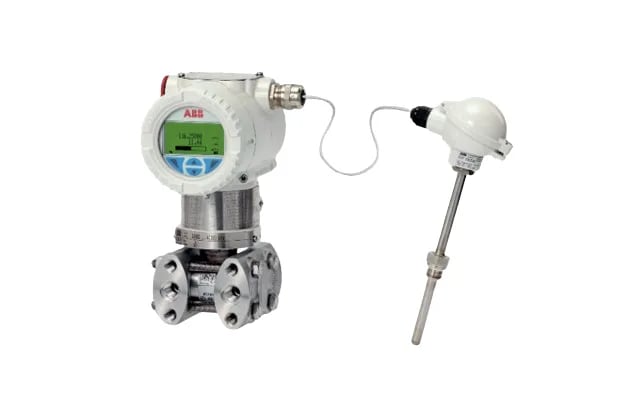
What's in the transmitter build
The 266CSH.C.3.K.Q.4.A.6-V2.EN..L1.......C1..H3: Maximum working pressure on this configuration is 0 to 10 MPa (0 to 100 bar / 0 to 1450 psi), so the sensor can sit on a process line well above its own span limit without bursting the diaphragm — sizing the upstream manifold to that 100 bar ceiling keeps the overpressure margin intact. Output is coded for Modbus RS485, which the order code calls out as 'Options requested' — confirm the option suffix against your host register map before terminating the fieldbus pair.
Wetted-parts and housing kit
No holes in the box on the wetted side: the diaphragm is Hastelloy C-276 with silicone-oil fill (NACE), bolts are AISI 316L SST non-exposed, gaskets are PTFE, and the vent/drain valves plus process flanges are AISI 316L SST — all NACE-rated for sour service where that classification matters. Gasket pressure ceiling on PTFE is 25 MPa (250 bar / 3625 psi), so the 100 bar working ceiling sits comfortably below the gasket rating — the kit does not push any sealing component to its limit. Housing is aluminium alloy in barrel form with a ½-14 NPT electrical connection, which lines up with the standard conduit entry most skid-builders expect to gland into.
Hazardous-area approval and on-board display
Explosion protection is combined ATEX, IECEx, and FM Approvals (USA and Canada) — one build code covers the three jurisdictions a North-American plant with European-skid equipment typically has to satisfy in parallel. An integral LCD is fitted (option), so the tech gets a local readout at the instrument without needing to cart a handheld into the field. Calibration is shipped with an inspection certificate 3.1 per EN 10204 (C1 code), and the pressure-bearing and process-wetted parts carry a separate 3.1 inspection with analysis certificates under the H3 option — the declaration pack covers both calibration traceability and metallurgy, which is what quality doc control asks for first.
Logistics and lead-time window
Estimated lead time is 16 to 18 weeks, which is the gating line for any spare-kitting decision: order against the BOM with that window in mind rather than treating it as a shelf-pull.