What this transmitter delivers on a process line
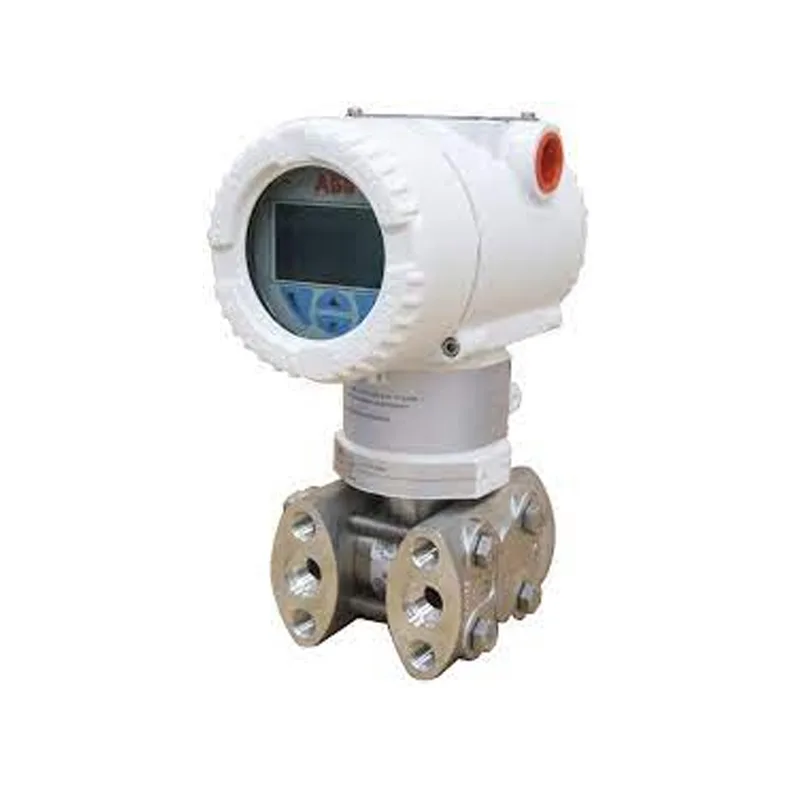
The ABB 266MSTNCSB6T1E2L1B5I2C1H3 is a differential pressure transmitter from the 266MST series, built for flow, level, and pressure measurement across industrial process lines. Its output is a combined HART digital communication and 4 to 20 mA analog signal, so the control room gets both the live loop current for fast PID response and the digital variable for configuration and diagnostics over the same two wires. The sensor span limits run from 20 kPa up to 2000 kPa (0.2 to 20 bar, 2.9 to 290 psi), and the maximum working pressure is rated at 160 bar (16 MPa / 2320 psi). That span covers most refinery and chemical differential-pressure applications — across an orifice plate, a filter, or a heat exchanger — without needing a different sensor cell for every range. An integral LCD display is fitted, giving a local readout of the process variable, loop current, or diagnostic codes without opening the housing or connecting a handheld. For a field tech walking a rack of transmitters, that display saves a trip back to the panel.
Wetted materials and process connection — what touches the media
The diaphragm is AISI 316L SST (1.4435) with silicone oil fill fluid, and the assembly is NACE-compliant for sour-gas service. Process flanges and adapters are AISI 316L SST (1.4404 / 1.4408) with a 1/2 in –14 NPT female through adapter in a horizontal connection configuration. Bolts are AISI 316 SST (NACE, not exposed to H2S) with Perbunan gaskets. For a process engineer specifying wetted materials, this build covers the majority of corrosive and mildly sour streams without an upcharge to Hastelloy.
Explosion protection and housing — where this transmitter can sit
The explosion protection certification is ATEX Explosion Proof Ex db tb, meaning the housing can contain an internal ignition and prevent flame propagation to the surrounding atmosphere. The housing itself is AISI 316L SST barrel type with an M20 x 1.5 electrical connection, and the tag and certification plates are stainless steel with laser printing (I2 option). For a site electrical engineer, the Ex db rating allows installation in Zone 1 or Zone 2 gas groups without an additional flameproof enclosure. The mounting bracket is a flat type in AISI 316 SST, suitable for the AISI housing. That bracket bolts to a 2-inch pipe or a flat panel, and the 316 SST grade keeps corrosion at bay in offshore or chemical plant environments.
Documentation and traceability — what ships with the order
This configuration includes an Inspection Certificate 3.1 per EN 10204 for calibration (C1) and a separate Inspection Certificate 3.1 per EN 10204 for material traceability of process wetted parts, with analysis certificates as material verification (H3). For a quality-document control specialist, those two certificates cover the calibration and material pedigree that a project FAT or a third-party inspector typically demands. No separate RoHS, REACH, UL, or IEC declarations are listed in the configuration; the ATEX Ex db certificate is the primary regulatory document.
The estimated lead time from the factory is 8 to 10 weeks. That is a typical build cycle for a configured instrument with wetted-material options and ATEX certification. For a project schedule, the lead time should be factored into the procurement timeline; a blanket PO with scheduled releases can lock in the production slot.