What the order code actually is
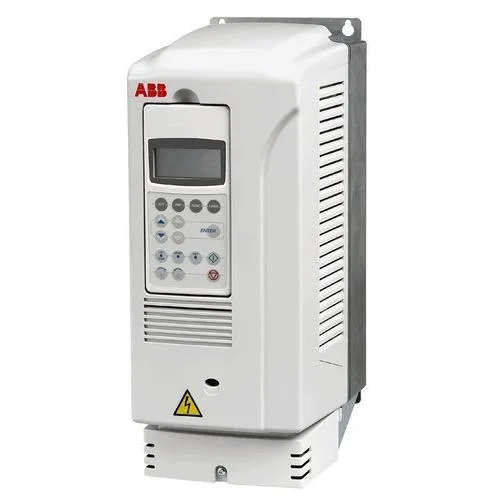
The ABB ACS800-DEMAG-01-0009-3+E200+0J400+N672+R720 is a configured ACS800-DEMAG series drive built off the standard ACS800 platform. It carries four factory option codes — E200, 0J400, N672, R720 — that are part of the identity and not field-installable alternatives, and it sits in the Motor Drives line under Motors & Motor Controls. On the bench, the unit weighs 8.28 kgs. That is a single-person lift for a service tech and worth knowing for the panel layout, but it is not the parameter that decides fit for a Demag hoist or crane retrofit — the option string and the firmware revision are what make this drive a match for a specific existing cabinet.
Where the ACS800-DEMAG fits in a panel
ACS800-DEMAG variants were specified into Demag crane and hoist control panels as a matched drive-and-controller solution, so a replacement order needs the full suffix string — E200, 0J400, N672, R720 — carried over from the nameplate of the unit being swapped. Dropping any of those codes changes the I/O map, the brake-control timing, or the fieldbus profile the Demag application macro expects. For a panel builder pulling a spare, the right move is to confirm the application macro and firmware version match the drive being replaced, not just the frame size. A near-identical ACS800 with a different option tail will power up on the same motor but will not behave the same at the brake-release or speed-reference stages, and that is the failure mode that gets flagged back to purchasing.
Sourcing the exact configured string
Because the full order code ACS800-DEMAG-01-0009-3+E200+0J400+N672+R720 is the identity, the RFQ has to carry all four plus-codes on the line. Specifying it that way into the BOM keeps the replacement qualified against the Demag application it was originally built for. For a packaging or materials-handling OEM running this drive on a bill of materials, the prudent sourcing stance is to quote the configured string to order through the independent channel rather than substitute on frame size alone, because an option mismatch surfaces as a commissioning failure on the hoist or travel axis, not as a simple no-start. The 8.28 kgs figure is a handling fact for the MRO shelf, not a reason to pick a different frame.