What it is — the M18 AC proximity switch that tells you when metal is gone
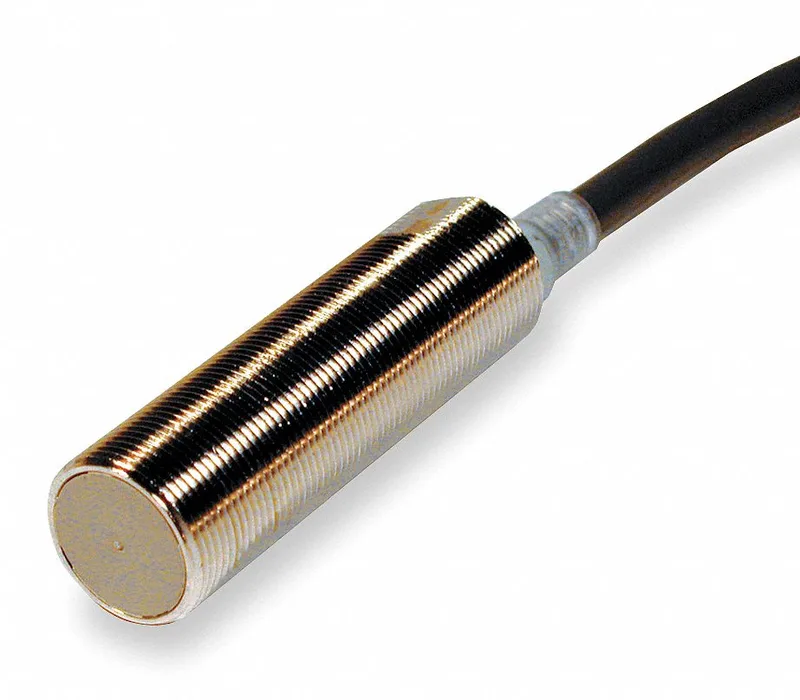
The Omron E2E2-X5Y2 is a shielded M18 inductive proximity sensor with a normally-closed (NC) 2-wire AC output. It detects ferrous targets up to 5 mm away and switches up to 300 mA directly without an amplifier. Supply voltage covers 20-264 VAC — universal for control transformers in industrial panels. The brass body is nickel-plated and sealed to IP67, with a 2 m prewired cable that terminates in bare wires. The cable protector at the sensor head resists pull-out, and the milled wrench grip helps with tightening into a mounting bracket without slipping. The NC contact form means the output is closed when no target is present — useful for fail-safe detection of a missing part or broken conveyor link. On loss of power the contact opens, giving a positive indication of absence.
How it fits against the NO sibling
The closest functional alternative is the E2E2-X5Y1, which is mechanically identical — same M18 thread, same shielded sensing face, same 5 mm range, same 300 mA/20-264 VAC rating, same 2 m cable. The sole difference is the output contact form: the X5Y1 is normally-open (NO) instead of NC. A panel wired for the NC X5Y2 cannot simply drop in the NO X5Y1 without reprogramming the PLC input logic or rewiring the load. The physical mounting (M18 nut, 60 mm body length) and cable routing are identical — no hardware changes needed for fit.
Shielded construction allows flush mounting in metal without derating the sensing distance. The M18 threaded barrel accepts standard 18 mm mounting clamps or lock nuts. The nickel-plated brass resists corrosion in washdown or oily environments. Rated for -40°F to 185°F operation, and NEMA 1, 3, 4, 6, 12, 13 enclosures. The 2 m cable length covers most junction-box runs.
Compliance documentation includes CCC and CE marks, and the sensor carries IP67 and multiple NEMA type ratings. RoHS and REACH declarations are available from Omron's support documents upon RFQ.