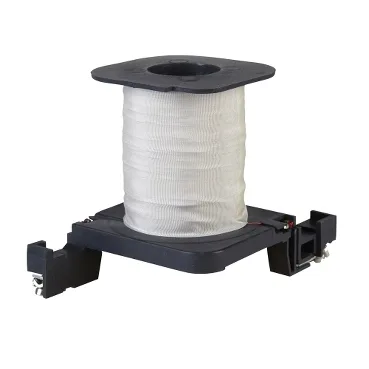
Schneider Electric LX4D7DD — Contactor & Starter Coils

Schneider Electric LX4D7DD TeSys Deca Contactor Coil, 96 V D

MPNLX4D7DD
Obsolete

Schneider Electric TeSys Deca, contactor coil, LX4D7DD, 96 V DC standard, for 80 A contactor, 22 W hold-in power, 75 ms time constant.

Sourced new & surplus through independent channelsAuthenticity-screened · ESD-safe packingListing updated Jul 2026

Specifications

LX4D7DD — Identification
ParameterValue
Product typeContactor coil
Product rangeTeSys
Device short nameLX4D7
Coil technologyWithout built-in suppressor module
LX4D7DD — Electrical
ParameterValue
Control circuit voltage limitsDrop-out: 0.1...0.3 Uc (at Operational: 0.85...1.1 Uc (at <131 °F (55 °C))
Time constant75 ms
LX4D7DD — Power & Thermal
ParameterValue
Inrush power (W)22 W 68 °F (20 °C))
Hold-in power (W)22 W 68 °F (20 °C)
LX4D7DD — Performance & Durability
ParameterValue
Max. operating rate3600 cyc/h 140 °F (60 °C)
Mechanical durability10 Mcycles
LX4D7DD — Environmental
ParameterValue
Operating temperature23...140 °F (-5...60 °C)

Product details

The LX4D7DD is a replacement contactor coil from the Schneider Electric TeSys Deca range, designed as a 96 V DC standard coil for an 80 A contactor. It's a service part — the kind you'd order to get a line back up when the original coil on a Deca contactor fails.

Rated for 96 V DC control voltage, with a drop-out range of 0.1 to 0.3 Uc and an operational range of 0.85 to 1.1 Uc at up to 55 °C. That means the coil will reliably pick up above about 82 V and drop out below about 29 V — important to check if your control supply sags under load. Hold-in power consumption is 22 W at 20 °C, and inrush is the same figure, so there's no spike to worry about on pull-in. The coil has a 75 ms time constant, which governs how fast the magnetic field collapses when power is removed — relevant if you're timing the contactor dropout against other devices in the circuit. No built-in suppressor module, so if your application has inductive loads nearby or you need to meet EMC emission limits, plan on adding an external flyback diode or RC snubber across the coil terminals. That's about one operation per second — fine for most motor starting and general switching duty, but if you're cycling faster than that in a high-speed pick-and-place or similar application, this coil will overheat and fail early. Ambient temperature range for operation is -5 to 60 °C.

Frequently asked questions

What is the closest alternative to the LX4D7DD in the TeSys Deca family?

The evidence does not list an official successor or a pin-compatible alternative. For a replacement that fits the same 80 A contactor, you would need to check the current TeSys Deca coil catalog — the coil voltage and mounting pattern must match. Without a direct cross-reference in the data, the safest path is to source the original LX4D7DD through surplus or consult Schneider's current documentation for the Deca contactor frame.

What is the TeSys range?

TeSys is Schneider Electric's range of contactors, motor starters, and control relays for industrial motor control and power switching. The LX4D7DD is a service part within that range, specifically a coil for the Deca series contactors.

What is the category 18401-WORLD SERVICE PARTS(CTR ACCESS)?

That is Schneider's internal classification code for this part. It indicates the LX4D7DD is a service part — a replacement component — rather than a new-equipment part. The (CTR ACCESS) suffix suggests it is an accessory for a contactor.

MPN
LX4D7DD