Speed range and voltage — the real constraint
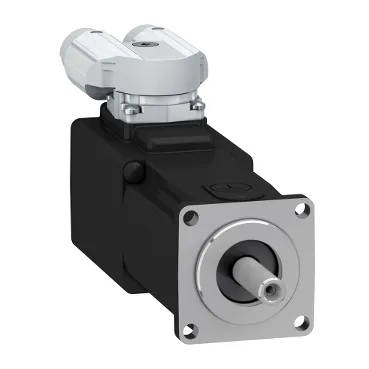
The SH30402P06F2100: This SH3 frame servo motor delivers 4000 rpm on single-phase 115 V or 230 V supply, and jumps to 9000 rpm when fed three-phase 400 V or 480 V — the speed ceiling is set by the input voltage configuration, not the motor itself. Nominal torque holds at 0.292 N.m for single-phase operation and rises slightly to 0.31 N.m on three-phase, so the torque density stays consistent across the voltage split — useful if you're migrating a machine from single-phase to three-phase without swapping the motor.
Brake and encoder — what drops into the old footprint
The holding brake delivers 0.4 N.m static torque — enough to hold a vertical axis at standstill on a small pick-and-place or labelling station, but not a load that needs dynamic braking. Encoder is an absolute single-turn SinCos Hiperface type — no homing sequence on power-up, which saves a cycle-time hit on machines that cycle power between batches. Motor flange is 40 mm with a 30 mm centring collar and 4.5 mm mounting holes — standard 40 mm frame interface, so it drops into most existing servo mounts without re-drilling the bracket.
IP65 and natural convection — no fan, no filter
IP65 rating on both the motor body and the shaft bushing means it handles washdown and dust without a separate enclosure — the shaft seal is part of the motor, not an add-on. Cooling is natural convection — no fan to clog or fail, but the continuous stall torque of 0.39 N.m (three-phase) and 1.5 A stall current define the thermal limit under sustained load.