What this motor delivers on the line
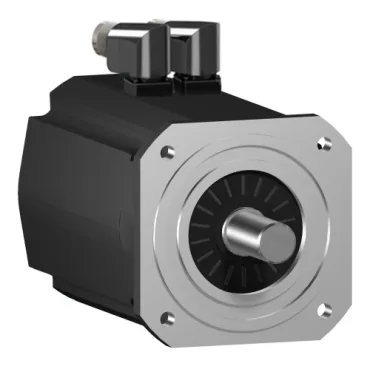
The SH32052P12A2000 is a Schneider Electric SH3-series three-phase servo motor sized for 7900 W continuous power on a 8.07 in (205 mm) international-standard flange. It runs from a three-phase supply and reaches 2400 rpm nominal at 480 V, with peak stall torque rated at 220 N.m across the 115 to 480 V operating window. On the 400 V three-phase rail the motor delivers 38.1 N.m nominal torque at 7980 W output, while the 230 V single-phase tap drops to 56 N.m at 5860 W — the rating the integrator reads on the nameplate depends entirely on which supply the drive is configured for.
Continuous and peak torque envelope
Continuous stall torque sits at 64.9 N.m from 115 to 480 V, with the 3-second peak output current allowed to reach 96.8 A. That current ceiling and the 220 N.m peak stall figure define the acceleration reserve available to the drive during a step command — sizing the drive's peak-current limit against this number is the first fit check on the BOM.
Mechanical integration into the machine
The shaft is 38 mm diameter with a 10 mm parallel key and an 80 mm shaft length, so coupling selection and key stock must be matched to those dimensions before the BOM closes. The international-standard flange carries the load back to the gearbox or pinion through 14 mm mounting holes on a 180 mm centring collar.
Environmental rating and cooling posture
The motor is sealed to IP65 on the housing and shaft bushing per IEC 60034-5, which is the rating a panel builder needs when the machine sits near coolant splash or outdoor washdown. Cooling is natural convection only, so the motor must be mounted with the housing fins in free air — no ducting or forced-air shroud is implied by the spec. Thermal copper-hot point is 266 °F (130 °C), the figure the drive's I²t model references when the continuous current is approached at low speeds.
Feedback and electrical connection
Electrical termination is a straight connector or a rotatable right-angled connector — the right-angle option is the one to pick when the cabinet routing would otherwise force a tight bend radius on the feedback cable.