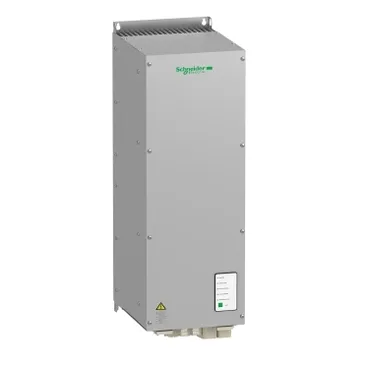
Braking power that matches the drive duty
The VW3A7210: Overload protection is set at 1.2 times the maximum current, so the unit can absorb short-duration energy spikes above the continuous rating before the protection triggers. Supply voltage range is 380–415 V at 400 V nominal, matching the common European 400 V industrial grid without a transformer tap.
Panel fit and environmental limits
IP20 enclosure means the braking unit is intended for cabinet mounting — no washdown or dust-sealed duty; plan for a clean, dry electrical enclosure. Dimensions are 837 mm high, 380 mm wide, 395 mm deep — verify the cabinet depth and backplate clearance before committing the panel layout. Operating altitude range is 1000–4000 m with a current derating of 5 % per 1000 m above 1000 m — factor this into the braking resistor sizing if the installation is above 1000 m. Storage temperature window is –25 to 55 °C; if the unit sits in an unheated warehouse before commissioning, keep it inside that envelope.
Efficiency and protection coordination
Efficiency is listed at 97 %, with a power factor (cos phi) of 1 — the braking unit presents a near-unity load to the DC bus, minimising reactive losses. Associated fuse rating is 400 A at 1000 V — coordinate the upstream fuse with the braking unit's peak current draw to avoid nuisance blowing during a full-power braking cycle.
Sourcing an obsolete braking unit
Sourcing is through independent distribution channels; quantities are confirmed at RFQ against the BOM line. The unit is a network braking module for Schneider variable speed drives — confirm the drive model and DC-bus voltage match before specifying, as the braking unit interfaces directly with the drive's DC bus.