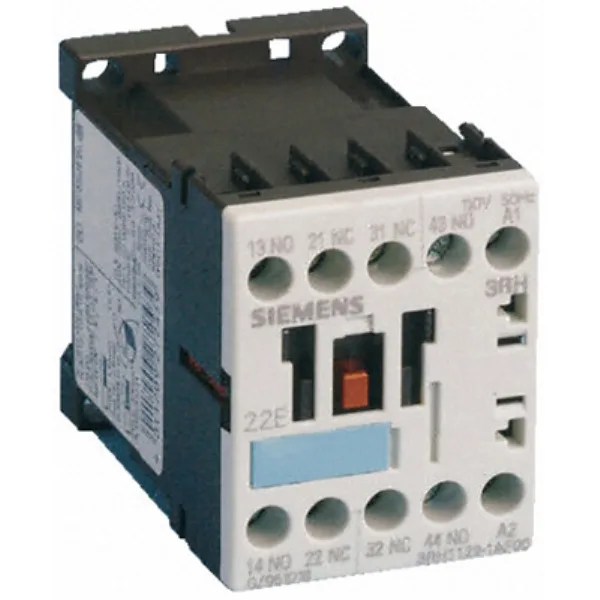
It carries 2 normally-open and 2 normally-closed instantaneous contacts, configurable for interlocking, status feedback, or logic-level signal routing inside a panel. The size S00 footprint (45 mm wide, 57.5 mm high, 72 mm deep) slots into the same DIN-rail real estate as the matching S00 contactors and overload relays.
Each contact is rated 10 A at 24 V, 6 A at 230 V, and 3 A at 400 V — these are the thermal (resistive) current ratings that govern continuous carry. For inductive DC loads the numbers drop sharply: 1 A at 110 V, 0.27 A at 220 V. That 0.27 A at 220 VDC is the figure to watch if you're switching DC solenoids or brake coils; the AC ratings don't apply there. Surge voltage withstand is 6 kV, which covers the impulse voltage expected in 400 V industrial environments (overvoltage category III).
Wiring and mechanical endurance
That covers most control-circuit wiring from signal-level pairs to 4 mm² power feeds for the contactor coil itself. Shock resistance is 10g at 5 ms and 5g at 10 ms, so it holds up on vibrating conveyor frames or packaging machinery.
Environmental compliance includes RoHS substance prohibition dated July 1, 2006, which covers the original EU RoHS directive. The pollution degree rating of 3 means it's designed for industrial environments with conductive or dry non-conductive pollution — standard for control panels not in clean rooms.