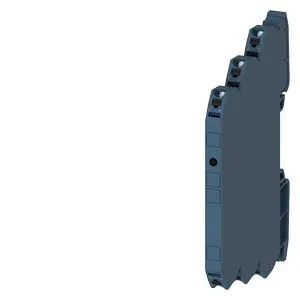
The Siemens 3RS7005-2FE00 is a SIRIUS multi-range signal converter — an active, switchable device that takes one of three common analog input signals (0-10 V, 0-20 mA, or 4-20 mA) and converts it to a proportional output. It's a single-channel unit with galvanic isolation between input and output, which means you can break ground loops between a field transmitter and a PLC analog card without adding a separate isolator. The input type is selected via the device itself — no external programming tool needed. The 4-20 mA range is the one you'll reach for most often on a plant floor: it's the standard for pressure, temperature, and level transmitters, and the live-zero lets you detect a broken wire. The 0-10 V input is common for speed references or valve position feedback from older controllers. That's tight enough to pack a dozen converters into the space of a paperback book. Mounting position is unrestricted, so you can orient the rail however the cabinet layout demands.
The 0.29 W active power consumption is negligible — you can power it from a 24 VDC loop supply without worrying about the total load on that PSU. The 30 V input voltage rating covers standard 24 V control circuits with margin for ripple. The 20 mV maximum voltage ripple spec tells you the internal filtering is tight enough for clean signal conversion even on a noisy DC bus shared with contactors or small drives. If your panel has a switching supply with 50-100 mV ripple, this converter won't pass that noise through to the analog input card. The rise time of 6 ms means the output settles within one PLC scan cycle on most systems — fast enough for process control loops, but not intended for high-speed motion or encoder replacement. The 30 Hz limit frequency confirms this is a process signal conditioner, not a pulse train repeater. IP20 protection means it's for use inside a closed control cabinet only — no washdown, no dust-laden environment.
The 6.2 mm width and snap-on mounting make it a direct drop-in for any panel already using SIRIUS 3RS7 series converters or similar narrow-form-factor signal conditioners. No rewiring or panel rework needed if you're replacing a failed unit of the same footprint. If you're sourcing against an RFQ, the key specs to confirm fit are the input signal type (0-10 V, 0-20 mA, or 4-20 mA), the 24 V AC/DC supply, and the 6.2 mm width for DIN rail space. The galvanic isolation between input and output is the feature that justifies the part over a passive resistor network — it eliminates ground loop hum and protects the PLC input stage.
Wire it with 20-14 AWG solid or stranded — the spring-cage terminals accept one conductor per clamp. Strip length is standard for this terminal family (about 8-10 mm). The 0 mm clearance requirements on all sides (up, down, forward, backward, sideways) mean you can butt it against adjacent components without derating or airflow concerns. The LED display version gives you a visual indication of output status — useful for troubleshooting on a live panel without breaking out a meter. The 24 V AC/DC supply is shared with the input loop in most installations; the converter draws so little power (0.29 W) that it won't load down a loop supply already powering a two-wire transmitter.