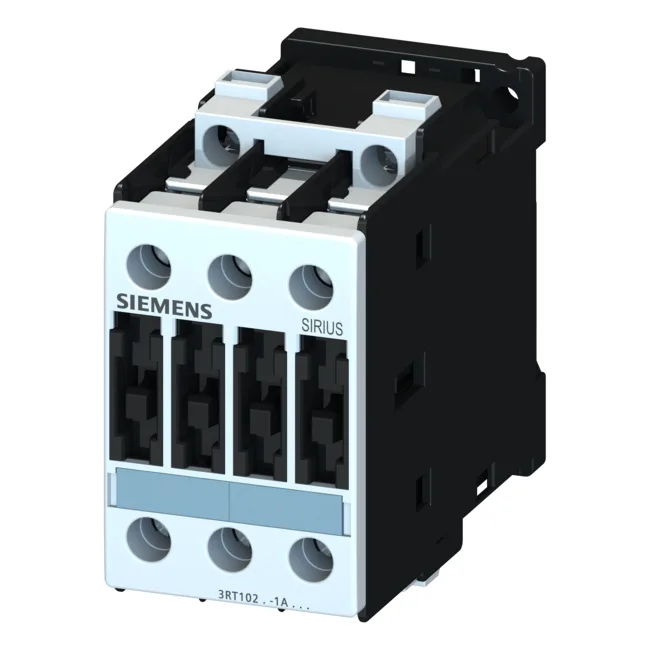
The contactor carries 2 normally-closed instantaneous auxiliary contacts. At 24 V they're rated 10 A, at 230 V they're rated 6 A, and at 400 V they're rated 3 A. That covers most control-voltage ranges you'll see in a panel — 24 VDC control circuits, 230 VAC pilot duty, or 400 VAC interlocking. That's a continuous-duty coil — no pulse-width economizer needed, but it does mean the coil stays warm. The front face carries IP20 finger protection; the terminals themselves are IP00, so they're live when the panel door is open. That's standard for this class — the panel enclosure provides the overall ingress protection.
That's a documentation detail for panel builders who tag their drawings to the standard.
That's the spec the panel designer needs to match to the branch circuit protection. That's a long service life for a contactor in a cycling application — well above the electrical life under full load, which will be lower and depends on the switching category.