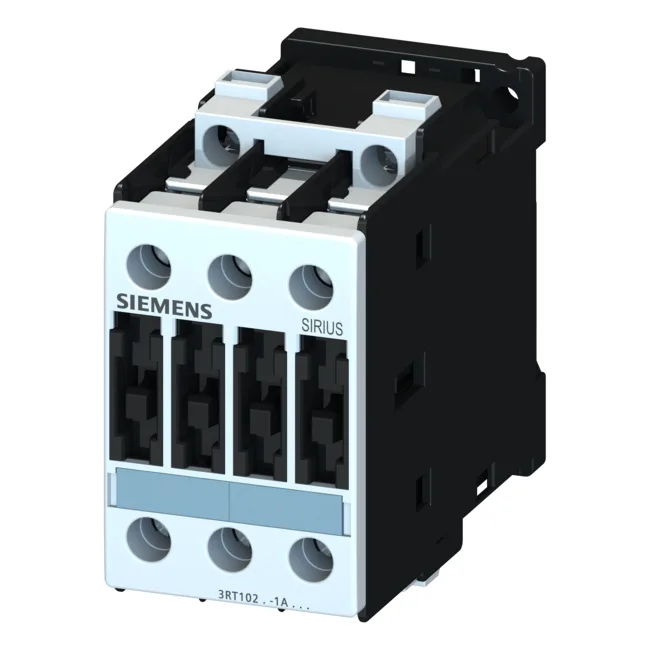
The Siemens SIRIUS 3RT1026-3AL20 is a power contactor in the S0 frame size, rated for 11 kW at 400 V AC-3 (squirrel-cage motor switching). The coil is 24 VDC, so it drops straight into a 24 VDC control circuit without an AC coil rectifier or separate power supply. For the tougher duty cycles — reversing, plugging, inching — the AC-4 rating is 15.5 A at 400 V. That is the current it can break under those high-stress conditions, which is lower than the AC-3 figure because the contactor sees full locked-rotor current each time. That means it clips onto the same DIN rail as the upstream motor circuit breaker or fuse base — no panel drilling, no adapter plate.
For a panel builder, Type 2 is the usual target — it keeps the contactor in service after a downstream short, avoiding an unplanned line-down replacement. The 35 A fuse also coordinates with the motor circuit breaker setting for the 11 kW load. The auxiliary contact block is rated for switching at 24 VDC up to 10 A, 60 VDC up to 2 A, 110 VDC up to 1 A, and 220 VDC up to 0.3 A. That DC switching curve matters for PLC inputs or relay loads — the current drops fast as voltage rises because DC arcs are harder to extinguish than AC. If the auxiliary contacts drive a 24 VDC PLC input, the 10 A rating leaves plenty of margin. That is normal for a panel-mounted contactor — the enclosure provides the terminal protection.
Integration notes
Side-by-side mounting is permitted (zero spacing between contactors on the rail). That saves panel width — you can pack multiple S0 contactors at 45 mm pitch without derating, provided the ambient temperature stays within the -25 to +60 °C operating range. At higher densities, check the thermal dissipation: the contactor's own heat plus neighbours can push the internal panel temperature above the 60 °C limit. That is the rated life without electrical load — for motor switching, the electrical life will be lower, depending on the switching frequency and current. For a pump running once per minute, that mechanical figure translates to years of service before the contactor needs replacement.