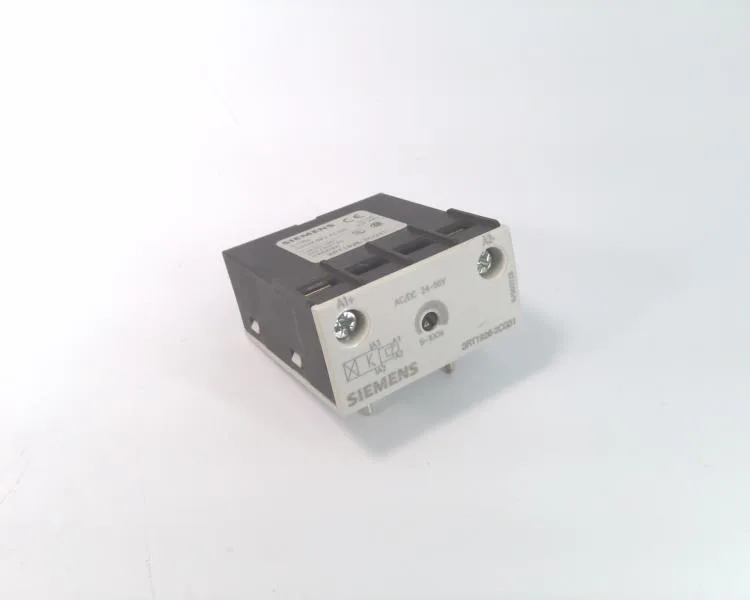
Key Rating and What It Means
The 110 V DC coil rating is the headline spec here. In railway environments, DC supplies are standard (battery-backed at 110 V nominal), and the control unit must hold in cleanly across the sag and surge profile of a traction battery. A 110 V DC coil that drops out at, say, 80 V gives you headroom during engine start or load shedding — the contactor stays closed when you need it most. The control unit itself doesn't switch the main load; it drives the contactor's electromagnet, so the coil's pickup and dropout thresholds are what matter for reliable operation.
This control unit mounts directly onto the SIRIUS railway contactor (typically the 3RT19 series), snapping onto the front or side depending on the contactor frame. The 110 V DC coil wiring terminates at the control unit's screw terminals; check the polarity marking if the unit includes a suppression diode — reversed DC can weld the coil suppression circuit. In a trackside cabinet subject to vibration, use ferruled stranded wire and torque the terminals to the value printed on the housing. The control unit adds no significant heat load to the enclosure, but the contactor's inrush current at 110 V DC can be several times the hold current, so size the DC supply for the peak, not the steady-state draw.