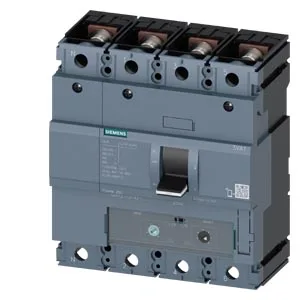
The 3VA1225-4GF42-0HC0: Breaking capacity is the headline here: 121 kA at 240 V, 75.6 kA at 415 V, 25 kA at 440 V, and 11.9 kA at 690 V.
How the ratings drive fit
At 55 °C it drops to 243.3 A, at 60 °C to 236.5 A, and at 70 °C to 223 A. The 158 mm height, 140 mm width, and 70 mm depth fit the standard SENTRON 3VA footprint — it'll drop into an existing panel layout that was designed around the 3VA frame without re-drilling the mounting plate. Compared to the smaller-frame 3VA1010-4ED32-0AC0 (which tops out lower on current and breaking capacity), this 3VA1225 carries the full 250 A and the high-interrupt rating. If your BOM originally called for a 100 A frame and the load grew, this is the step-up without changing the brand or family.
The N-conductor protection is rated at 100%, so it handles full-phase unbalance on the neutral without derating the breaker. That's a spec to check if you're feeding a nonlinear load with high triplen harmonics.
That covers unheated warehouses and most plant-floor conditions. The shunt trip (STL) is wired separately from the main power path — it's a voltage-trigger release that trips the breaker on command from a remote E-stop or PLC output. The two HQ auxiliary switches give you NO/NC status feedback for the panel HMI or SCADA.