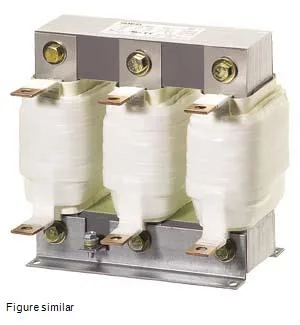
The SIDAC 4EU3052-0EE00-4BA0 is a 3-phase AC output reactor rated for a maximum continuous current of 147 A and an inductance of 0.15 mH. It is designed for use on the output side of a variable-frequency drive to limit the rate of voltage rise (dV/dt) and reduce motor cable reflections, protecting the motor insulation from overvoltage stress. The reactor is rated for a switching frequency of 5330 Hz, which covers the typical IGBT switching range for general-purpose drives.
For a drive output, size the reactor so the drive's rated output current does not exceed this figure; a 132 kW drive at 400 V typically draws around 240 A, so this reactor suits drives in the 75–90 kW range depending on duty. The 0.15 mH inductance value determines the dV/dt limiting effect: lower inductance passes more high-frequency content, higher inductance provides more smoothing but increases voltage drop. At 5330 Hz switching frequency, this reactor is matched to IGBT drives operating in that range — if your drive switches at 4 kHz or 8 kHz, the reactor still functions but the attenuation profile shifts. Mount it with clearance to adjacent components for airflow; thermal class H allows high internal temperatures, but the panel ambient must stay at or below 40 °C for the full 147 A rating. The flat-type terminals accept busbar or cable lugs — no screw-clamp or spring-cage connection here, so plan the wiring terminations accordingly.
This output reactor installs between the VFD output terminals and the motor cable, typically on a panel floor or mounting plate rather than a DIN rail. The 0.3 m width and 0.26 m height footprint means it occupies roughly the space of a small contactor — plan for a 0.21 m depth behind the panel door. The 3-phase flat connectors on the main circuit require busbar or lugged cable; no auxiliary control wiring is needed. Because the reactor is unshielded (IP00), maintain at least 50 mm clearance to grounded metalwork and other components to avoid eddy-current heating in nearby steel.