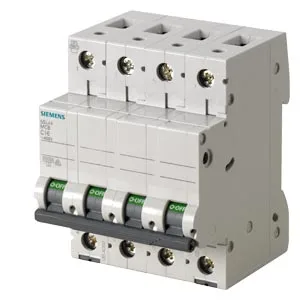
The Z characteristic means it trips on short-circuit between 2.5 and 5 times the rated current — tighter than a B curve (3-5×) and faster than a C curve (5-10×) — making it the right choice for protecting semiconductor power supplies, control transformers, and other loads with sensitive electronics that can't tolerate a slower trip.
The 4-pole format (3 phases + neutral) suits three-phase final sub-circuits where the neutral needs overcurrent protection — common in IEC markets for lighting, socket outlets, and small motor feeds. The Z curve's fast magnetic release keeps downstream semiconductor rectifiers and power supplies from seeing a full fault let-through.