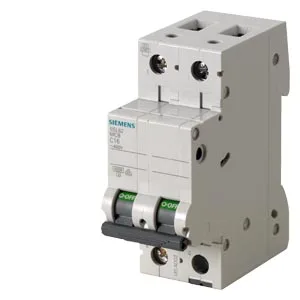
The Siemens 5SL6208-7RC is a 2-pole miniature circuit breaker from the SENTRON 5SL6 series, rated 8 A with a C tripping characteristic and a breaking capacity of 7.5 kA per EN 60898. It protects branch circuits in residential and infrastructure panels against overloads and short circuits — the C curve means it tolerates moderate inrush (e.g., from small motors or transformers) before tripping, so it's a common choice for general-purpose socket circuits and lighting in commercial fit-outs.
Rated 8 A at 415 V AC (multi-phase) and 250 V AC single-phase, with a maximum multi-phase voltage of 440 V AC. For DC circuits, it's rated up to 72 V, so it can also serve DC sub-distribution in telecom or solar combiner boxes. Mechanical endurance is 10 000 switching cycles — not a high-cycle part for frequent switching duty, but fine for a protective device that operates only on fault or during manual isolation.
Width is 36 mm (2 width units), depth 76 mm, height 90 mm, with an installation depth of 70 mm behind the panel face. Touch protection is built in (finger-safe terminals).