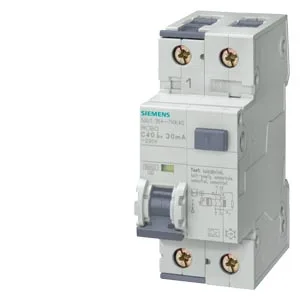
Type AC (WS) means it detects sinusoidal AC earth faults only, not pulsating DC or smooth DC; for variable-speed drive or solar-inverter circuits you would need Type A or Type F instead. The 10 mA IΔn (rated residual operating current) is the sensitive end of the range, used where a lower earth-leakage threshold is critical — think medical locations, wet environments, or circuits serving socket outlets in certain European residential standards.
The 70 mm depth (D=70mm) matters when fitting into a shallow consumer unit or distribution board — standard 2-module RCBOs often sit in the 70 mm range, but verify the enclosure depth plus wiring space before committing. 1+N-pole means it switches the line conductor only; the neutral is solidly connected through without a switching contact. On a DIN-rail assembly, the neutral terminal is typically on the left side of the device — check the terminal marking for correct line/neutral orientation.