What the ratings mean for fit
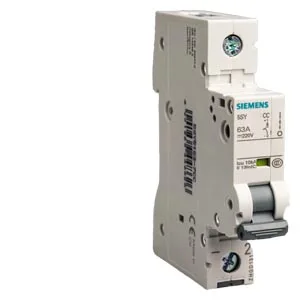
The 5SY4110-7CC is a 1-pole (1P) SENTRON miniature circuit breaker with a C-curve tripping characteristic. The C-curve means it trips at 5 to 10 times rated current, making it the standard choice for inductive loads like small motors, contactor coils, and lighting ballasts where inrush currents are moderate. The 10 kA breaking capacity at 400 V AC (per EN 60898) tells you it can safely interrupt a fault current up to 10,000 A without welding or exploding — that is the standard domestic and light-commercial fault level in most European panels. Under UL 1077 and CSA C22.2 No.235 it is rated 5 kA, which covers North American supplementary protection applications. At 18 mm wide (1 modular width unit), it snaps onto a standard DIN rail and occupies one slot in a consumer unit or distribution board. The IP20 rating with connected conductors means it is protected against finger contact but not against water ingress — standard for enclosed panel mounting. The operating temperature range of -40 °C to 75 °C and the 95% humidity tolerance (derating above 55 °C) cover most industrial and outdoor cabinet environments.
Panel integration notes
Mounts in any position on a DIN rail via the quick-assembly system. The 70 mm installation depth leaves clearance behind the panel door for wiring and busbar connections. The combined terminal at both top and bottom accepts the same conductor size for feed-through wiring. The sealable design allows the installer to lock the toggle position after commissioning. Vibration resistance per IEC 60068-2-6: ±1 mm at 5 to 25 Hz, 50 m/s² at 25 to 150 Hz — fine for machine-mounted enclosures.
Compliance and documentation
The 5SY4110-7CC is halogen-free and silicon-free, which matters for clean-room or sensitive electronics environments where outgassing can cause contact corrosion. The overvoltage category III and pollution degree 3 ratings confirm it is designed for fixed installation in the distribution board, not for portable equipment. The energy limitation class 3 means it limits let-through energy to a low level, reducing arc-flash risk downstream.