I/O Count and What It Means
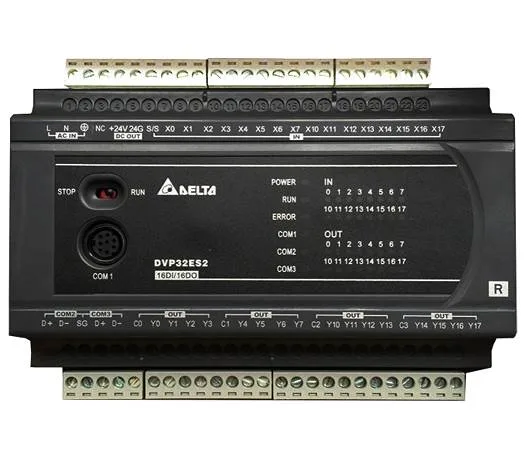
With 36 inputs and 24 outputs, this PLC handles a medium-sized machine without needing an expansion rack for the basic I/O. The 36 inputs cover things like limit switches, proximity sensors, and pushbuttons; the 24 transistor outputs drive contactors, indicators, or small solenoid valves directly. Transistor outputs are solid-state — no contacts to pit or weld, and they'll switch at higher frequencies than a relay output can manage. That makes this unit a natural fit for a pick-and-place cell or a packaging machine where you're counting parts or timing fast cycles.
Relay vs Transistor — Choosing the Output Method
The DVP60ES200R is the relay-output sibling of this unit — same 36 inputs, same 24 outputs, same power supply, same form factor. The difference is in the output method: relay contacts handle higher inrush currents (good for motor starters or big contactors) but wear out with frequent cycling. The transistor outputs on the 200T switch faster and last longer in high-duty applications, but they can't handle the same surge current. If your panel was wired for the relay version, the transistor unit drops into the same footprint — no rewiring needed for the PLC itself, though you'll want to check the load specs on your output devices before swapping.