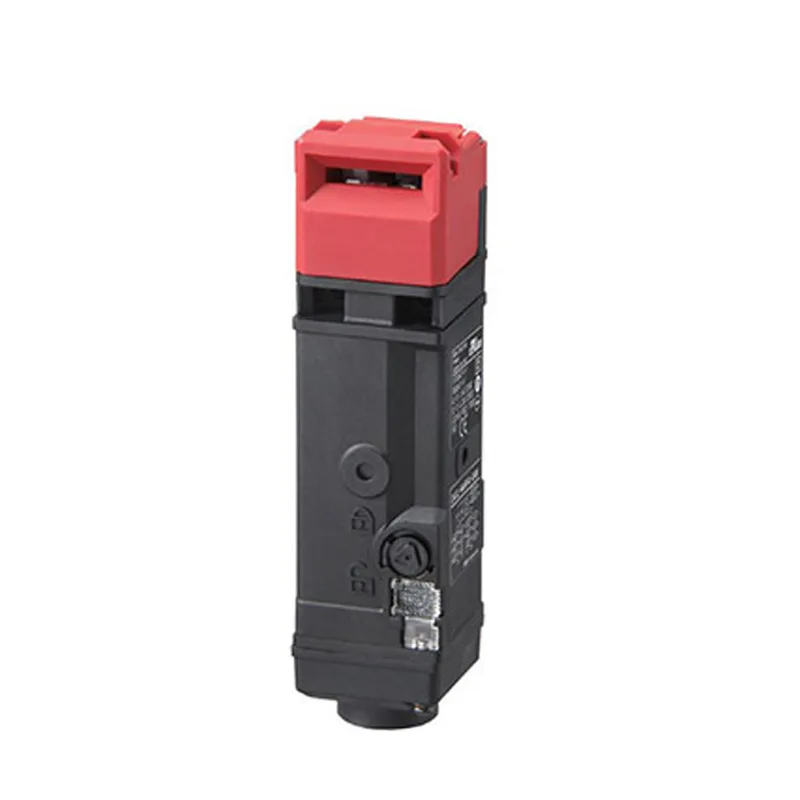
Guard door locking with monitored solenoid release
The D4SL-N2PFA-D + D4SL-NK2 is a safety lock switch paired with its dedicated operation key — the switch body mounts to the guard frame, the key to the door. When the door closes, the key enters the switch head and the internal contacts confirm the door position before the solenoid engages the lock. The lock mechanism is mechanical, released by a 24VDC solenoid (door lock and release code A). That means the lock stays engaged when power is removed — the solenoid must be energised to unlock the door, which is the fail-safe configuration for access gates where you don't want the guard opening on a power loss. The built-in switch configuration is P — 2NC/1NO + 3NC, giving you five total contact circuits. The 2NC/1NO set typically feeds the safety controller (two NC channels for the redundant safety signal, one NO for status feedback), while the separate 3NC block can drive a second safety path or an auxiliary interlock loop.
What the specs mean for panel fit-up
Conduit entry is G1/2 (code 2) — a standard metric PG13.5 or 1/2-inch NPT adapter fits with the right thread adapter. That's the size you'll find on most European-style control boxes and junction boxes; plan the gland plate accordingly. The head material is resin (code F) — glass-filled thermoplastic, not metal. That's fine for dry indoor environments but if the guard is on a washdown zone or a food line, verify the chemical resistance against your cleaning agents. A 24VDC orange LED indicator (code D) on the switch body shows when the solenoid is powered. That's a commissioning and troubleshooting aid — you can see at a glance whether the lock is energised without putting a meter on the coil.
Lifecycle and sourcing posture
Estimated lead time is 2-3 weeks from order — that's typical for a built-to-order safety component. For a line-down spare, keep one on the shelf; for a new build, factor the lead into your project schedule. Sourced through independent distribution channels against an RFQ.