What the timer actually does on the panel
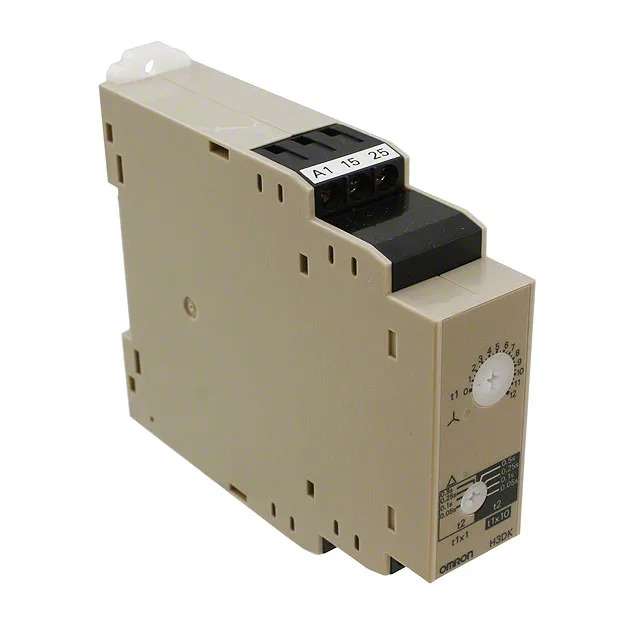
The H3DK-GE AC240-440 sits in Omron's H3DK-G series of electronic timers, configured as a star delta controller for the classic two-step motor start sequence — close to the line in star, then transition to delta once the timer expires. It accepts a 240 ~ 440 VAC supply across the wide industrial mains range, so the same unit covers 240 V single-phase-derived control, 380 V and 400 V three-phase control transformers, and 440 V plant distribution without a different SKU. The delay range runs 1 Sec ~ 120 Sec, set via a screwdriver slot on the face — the kind of coarse, repeatable adjustment a wireman makes with a powered-down panel and a hand tool, not a keypad. Timing initiates from input voltage, so the unit starts its clock the moment the run command is applied — no separate trigger input to wire.
Output side: contact form and what it can switch
The output is an SPDT (1 Form C) mechanical relay, so a single timer drives both the star contactor and the delta contactor through the changeover — common in star-delta starters where one pole closes to the star coil and the other closes to the delta coil at transition. Contact rating is 5A @ 250VAC, which is the ceiling for the pilot duty driving the contactor coils; this is not a power contactor itself, it is the timing element that tells the contactors when to switch.
Mounting, wiring, and where it lives in the panel
DIN Rail mounting with screw terminals — the timer snaps onto the standard 35 mm rail alongside the contactors it sequences, and the wiring lands on screw clamps rather than spring or push-in, which is the conventional choice for motor-starter cubicles. As a star delta controller in the broader Electronic Timers & Counters category, its job is sequencing the star-to-delta transition in reduced-voltage motor starting — pumps, compressors, fans, and conveyors where a direct-on-line inrush would trip the supply.
Lifecycle and how it shows up on a BOM
Lifecycle reads as mature and Active, so this is a long-running SKU rather than a new-release or end-of-life line — spares and repeat orders are not fighting a last-time-buy window.