Contact Ratings by Voltage — What They Mean on the Bench
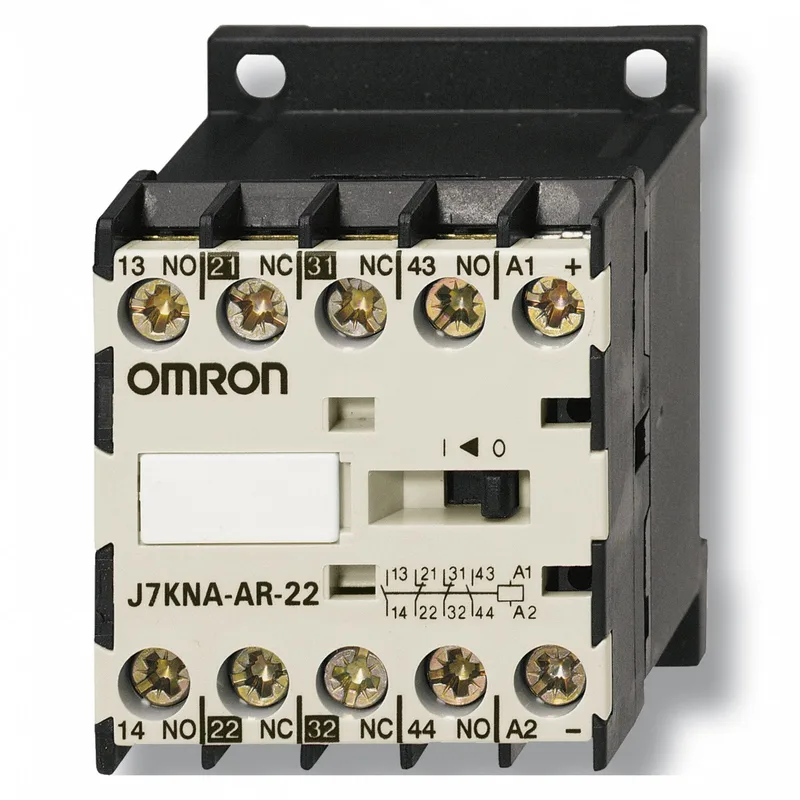
The J7KNA-AR-40 24VS: The contact ratings are given per voltage band, not as a single blanket number. At 220 to 240 V AC it switches 3 A; at 380 to 415 V AC it's 2 A; at 660 to 690 V AC it drops to 0.6 A. That voltage-dependent derating is typical for relay contacts — the arc energy scales with voltage, so the current must come down to keep the contacts from welding or eroding. For DC switching the derating is steeper: 2 A at 60 V DC, 0.4 A at 110 V DC, and only 0.1 A at 220 V DC. If you're switching a DC solenoid or valve at 110 V, plan for that 0.4 A ceiling — don't assume the AC rating carries over.
Panel Fit and Sourcing Reality
This is a socket, not a relay — it accepts a plug-in relay (typically the Omron J7KNA series relay) and provides the screw-clamp or quick-connect terminals for wiring. The coil draws at 24 V DC; with the diode in place, polarity matters — reverse the leads and the diode blocks, the relay won't pick. Wire it with the positive to the marked terminal.