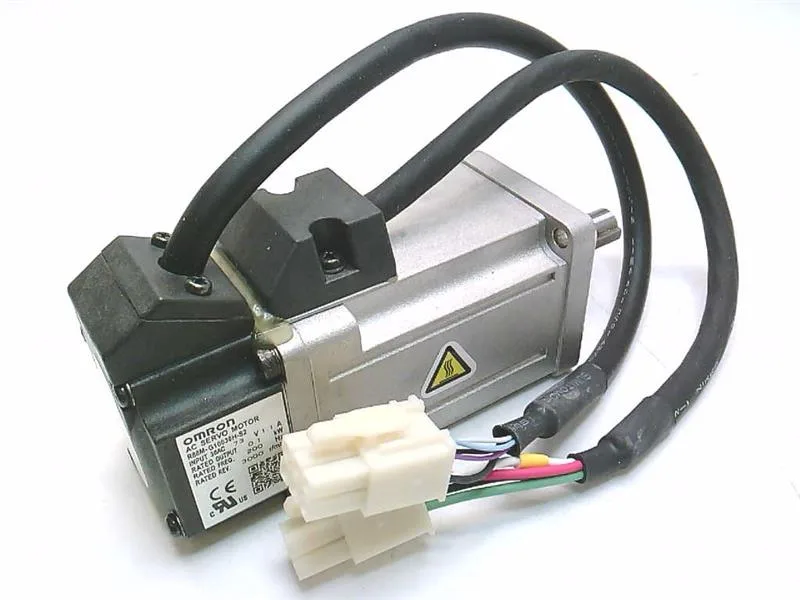
Production status is the first decision point
The Omron R88M-G10030H-S2 is a 100 W cylinder-type servomotor in the G-series (the 88 code), sized for 3000 r/min at 200 VAC with an incremental encoder on the H-class winding, and the listing carries a flag of eol_hot, which means the order code is on the EOL watch list — not a healthy active BOM line to commit against without a cross-reference plan in hand. The S2 option spec'd here adds a keyed shaft and a tapped face — that's the configuration to retain if this motor is being specified as a drop-in replacement into a machine that already uses the S2-suffix variant.
Sizing the 100 W envelope
At 100 W (the 100 in the suffix) and a 3000 r/min rated speed, this motor sits in the low-power fractional-horsepower slot — the class used for indexing tables, small feeders, light conveyor drives and precision positioning axes where the upstream drive is sized to match a 200 VAC bus with incremental-encoder feedback. The incremental-encoder H specification on the 200 VAC winding is the detail that decides which Omron drive controller in the matching G-series family it pairs with — a mismatch on encoder protocol is the classic reason a retrofit stalls at commissioning.
Sourcing posture for an EOL-flagged motor
Because the lifecycle flag reads eol_hot, the practical question isn't whether to spec it — it's whether the machine on the floor can be kept running with this exact order code until a board-level redesign is approved, or whether the migration path has to start now. The listed estimated lead time of one to ten working days points to limited-channel stock rather than factory flow — supply is being drawn from inventory positions, not fresh production runs, and availability is lot-specific.