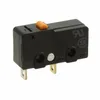
The part behind the order code
Buyers land on this exact code when a panel drawing, a maintenance log, or a BOM line already names the SS-5-F-3 specifically — the switch is the part, not a generic stand-in. It belongs to the Limit Switches category, which means it is specified for mechanical position feedback: a plunger or lever actuator that opens or closes one circuit as a machine element crosses a setpoint.
Why the SPST-NO contact arrangement matters for fit
SPST-NO on a subminiature snap switch is the form factor most often used as an end-of-travel interlock or a door/guard position indicator on a control panel — one wire in, one wire out, the contact closes only when the actuator is depressed, so a broken wire or a stuck actuator reads as a fault at the input rather than silently passing a signal. The Omron SS subminiature series is specified across a wide range of electrical ratings; the SPST-NO version here is intended for low-current signal switching typical of PLC and relay logic inputs rather than direct motor load switching — confirm the actuator force, differential travel, and electrical rating on the datasheet before substituting into a higher-current application.
Sourcing posture for the maintenance bench
For a maintenance buyer stocking one against an installed asset, the practical play is to hold at least one in the cabinet before the in-service unit fails: subminiature switches sit inside machines where access is awkward, and a fifteen-minute swap with a spare on the shelf beats a procurement cycle while the line is idle.