The switch a maintenance shelf tends to wear down
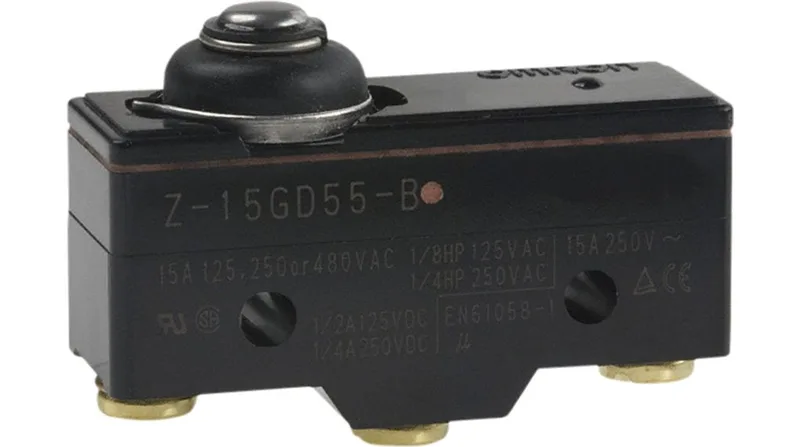
The Omron Z15GDBOMI is a basic limit switch from the Z Series — a short spring-plunger actuator driving a single NO contact, terminated on screw terminals and rated for 15 A at 250 VAC (alongside a 15 A / 14 VDC rating on the DC side). With an operating force of 3.43 N, it sits in the lighter-touch end of Omron's Z-family mechanical switches, which is exactly why it ends up on the maintenance shelf as a fast-mover spares item rather than a once-a-year special. The 500 VDC insulation rating is the ceiling the switch can be specified within for overvoltage category considerations, and the IP00/IP62 sealing combination makes it suitable for inside-enclosure mounting or benign cabinet-side duty rather than washdown zones — the IP62 leg covers limited dust and drip exposure once seated, but the body itself is not a sealed housing.
What 15 A at 250 VAC actually buys you on the line
At 15 A the contacts will switch a typical fractional motor, solenoid, or indicator lamp circuit directly without an interposing relay — the load is the contact ceiling, not the actuator. The DC leg is asymmetric: 15 A is published at 14 VDC specifically, which is the automotive/control-circuit envelope, so for higher DC voltages the contact rating should be re-validated against the published resistive-load curve rather than assumed flat. Mating is purely mechanical: the short spring plunger returns to its rest position once the cam or flag clears, so no external springs or overtravel hardware are needed for the basic duty cycle.
Sourcing posture and shelf reality
For an MRO buyer that translates into steady replenishment: this is the kind of basic switch that belongs at min/max rather than on a once-a-decade reorder calendar, because mechanical switches get exercised to failure long before they go obsolete on paper. Replacement is a like-for-like swap on the same Z-series footprint, not a board spin — the Z15GDBOMI's screw-termination, plunger-rotation, and panel-cut geometry stay inside the Z family dimensions, so a field swap to a sibling Z part can be done with the same mounting holes. Confirm the contact configuration (1NO here) and the actuator type before committing the alternate, because Z-series variants span both 1NO/1NC and several plunger lengths in the same housing envelope.