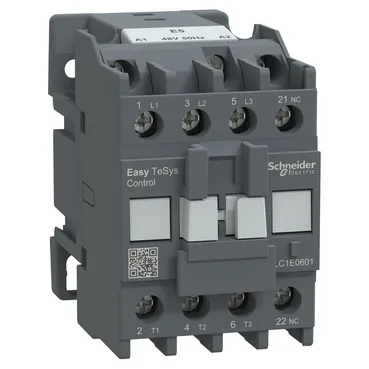
The AC-3 utilisation category rating means it is tested for switching three-phase induction motors — the 6 A rating at ≤440 V governs the maximum motor current it can handle under starting and plugging conditions, not just the steady-state load. For resistive loads (AC-1), the current capability is higher, but the AC-3 figure is the one that decides fit for a motor BOM line. The coil is 48 V AC at 50 Hz — verify your control transformer matches exactly, as a 48 V coil on a 24 V or 110 V circuit will not pull in reliably. The 1NC auxiliary contact is built in; the guaranteed 1.5 ms non-overlap time between NC and NO poles means it breaks before make, which matters for reversing or star-delta circuits where overlapping power legs would cause a phase-to-phase fault.
Sourcing reality — obsolete, not a dead end
The part carries TH protective treatment (pollution degree 3) per IEC 60068-2-30, so any surplus unit should be stored in a controlled environment — check for corrosion on the terminals and coil pins before acceptance, especially if the part has been sitting on a shelf for years.
Mounts on DIN rail or a plate. Operating ambient is -5 to 55 °C without derating; storage range is -60 to 80 °C. At altitudes above 3000 m, the air density drops enough to reduce the dielectric withstand and thermal dissipation — derate per the standard or keep the part below that threshold.
Certified to EN/IEC 60947-4-1 (contactor standard) and EN/IEC 60947-5-1 (control circuit devices), plus the Chinese GB/T equivalents. Also complies with EN/IEC 60335-1 Clause 30.2 for glow-wire / fire resistance, and the 850 °C fire resistance test per IEC 60695-2-1 — relevant if the contactor sits in a household or light-commercial appliance enclosure.