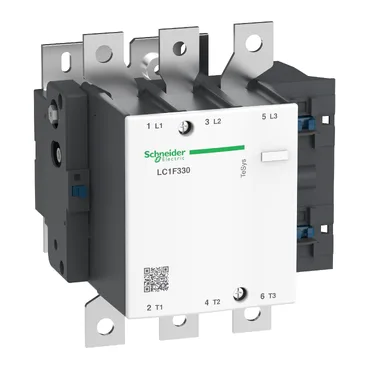
The LC1F330ED is a 3-pole TeSys F contactor with a 48 VDC coil, sized for motor loads up to 160 kW at 400 V AC (AC-3 duty). The same contactor also carries an AC-1 resistive load rating and an AC-4 rating for inching/jogging duty, so it covers the full utilisation category range for a direct-on-line starter. The associated fuse recommendation is 400 A aM or 500 A gG (≤ 440 V), so plan the branch circuit protection accordingly.
If you need a drop-in replacement with the same footprint and 48 VDC coil, a parametric cross-reference within the TeSys F range is possible — but that requires a spec-by-spec comparison of the mounting plate, power terminations (lug/bar), and control circuit voltage limits. The LC1F330ED uses a plate mount, not DIN rail, so any replacement must share the same bolt pattern.
Integration notes
Mounts on a plate (not DIN rail) — the power circuit uses bolted lugs (up to 240 mm² ring terminals) or a 30 x 5 mm bar connection. Control circuit wiring is screw-clamp terminals accepting 1–4 mm² flexible or solid. Coil hold-in power is 5 W at 20 °C; inrush is 750 W. The DC control circuit operates between 0.85 and 1.1 Uc (about 40.8 to 52.8 VDC) and drops out between 0.15 and 0.2 Uc (7.2 to 9.6 VDC). That wide dropout margin means it's tolerant of voltage sags on the control supply — useful on lines with shared DC buses.