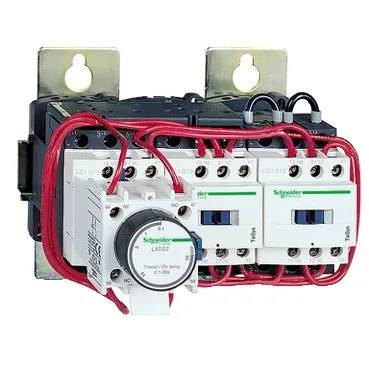
Part overview and lifecycle status
It is configured as 3 x 3P (3 NO) power poles, pre-wired for motor starting applications. This part is now classified as obsolete per the manufacturer's lifecycle status.
The AC-3 rating at 150 A means this starter is sized for squirrel-cage induction motor loads where starting current is typically 6-8x FLA — the 150 A figure governs the motor's full-load current, not the inrush. For a 400 V three-phase supply, this would correspond to approximately a 75 kW motor, though the exact sizing depends on duty cycle and ambient conditions. The 220 V AC coil means the control circuit must supply that voltage; verify your panel's control transformer matches before wiring. The operating altitude of 3000 m means no derating is required up to that elevation; above that, dielectric withstand and thermal dissipation must be recalculated. Flame retardance V1 per UL 94 and fire resistance to 850 °C per IEC 60695-2-1 confirm the thermoplastic enclosure meets the flammability requirements for unattended equipment in most industrial codes. The TH protective treatment per IEC 60068-2-30 means it withstands damp heat cycling — relevant for non-condensing humidity in unheated panel rooms.
Deployment context
As a pre-wired star delta starter, this unit integrates directly into a motor control center or panel — the 3 x 3P configuration handles the main, star, and delta contactor functions internally. The 3-pole design means it connects to a three-phase motor; the 220 V AC coil ties into the control transformer secondary.