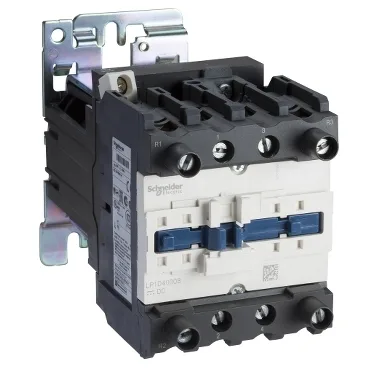
The LP1D65004ND is a 4-pole contactor from the TeSys Deca range, rated for AC-1 resistive loads at 80 A and 440 V, with a 60 V DC coil. It's built to switch motor loads in control panels and industrial machinery, with utilisation categories covering AC-1, AC-3, AC-3e, and AC-4 duty. The coil pulls 60 V DC, so you'll need a DC supply on the control side — common in 48 V or 60 V battery-backed systems or when you've got a DC bus running through the panel. The 4-pole configuration (3 poles plus one auxiliary or a fourth power pole) gives you flexibility for two-speed motors or switching the neutral in a single-phase load.
The headline AC-1 rating of 80 A at 440 V is for resistive loads — think heaters, lighting banks. But the AC-3 and AC-4 ratings are what matter for motor switching: AC-3 covers starting and stopping a squirrel-cage motor under full load, while AC-4 handles inching and plugging. The actual AC-3 current rating isn't listed here, so when you're sizing this for a motor, you'll want to check the TeSys Deca selection table — the AC-1 number is the ceiling for resistive duty, not the motor rating. The contactor is rated for operation from -40 to 60 °C ambient, with derating up to 70 °C. That's a wide thermal window — it'll survive a hot summer in a non-air-conditioned plant room. Storage range goes from -60 to 80 °C, which covers shipping through a northern winter or sitting in a warehouse in the desert. Altitude derating kicks in above 3000 m, so if your site is at 3500 m in the Andes, you'll need to reduce the current rating. IP2X protection means it's finger-safe — you can't poke a screwdriver into the live parts — but it's not sealed against dust or water. This is a panel-mount part, so it goes inside an enclosure, not out in the weather.
This contactor carries compliance with IEC 60947-4-1 (the main standard for contactors and motor-starters), EN 60947-1, BS 5424, VDE 0660, and JEM 1038. That's the full set of European and international standards you'd expect for a machine going into a CE-marked panel. The V1 flame retardance per UL 94 and 850 °C glow-wire resistance per IEC 60695-2-1 mean the plastic body won't propagate a fire if something goes wrong inside the panel.