The AC-4 and AC-1 utilisation categories are also covered, giving flexibility for inching/jogging or resistive loads.
The 690 V AC rated operational voltage on the power circuit gives headroom for 480 V or 575 V systems, but the AC-3 current derates above 440 V; check the thermal curve if running at the higher voltage. The 125 V DC coil is less common than 24 VDC or 120 VAC — verify your control supply matches before committing the BOM line.
Mechanical and environmental robustness
Rated to withstand 15 Gn shock for 11 ms with contacts closed (IEC 60068-2-27) and 4 Gn vibration at 5–300 Hz closed — figures that matter for applications mounted on machinery or in mobile equipment where mechanical shock is a concern. The flame retardance meets V1 per UL 94 and NF F 16-101, which is relevant for rail and transport applications that require strict fire-smoke-toxicity compliance. Operating altitude is 2000 m without derating, so it is fine for most installations outside high-altitude sites.
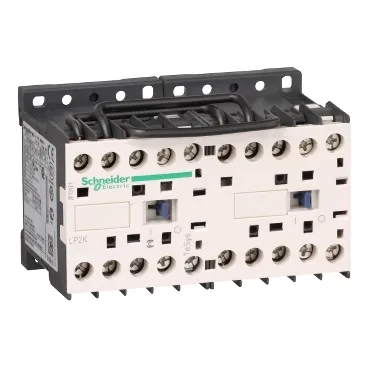
The preassembled reversing busbar saves panel-build time — no loose bus links to torque or lose. The 125 V DC coil is polarity-sensitive; verify the free-wheel diode or suppression module is correctly oriented if the control circuit uses DC switching.