What It Is and Where It Fits
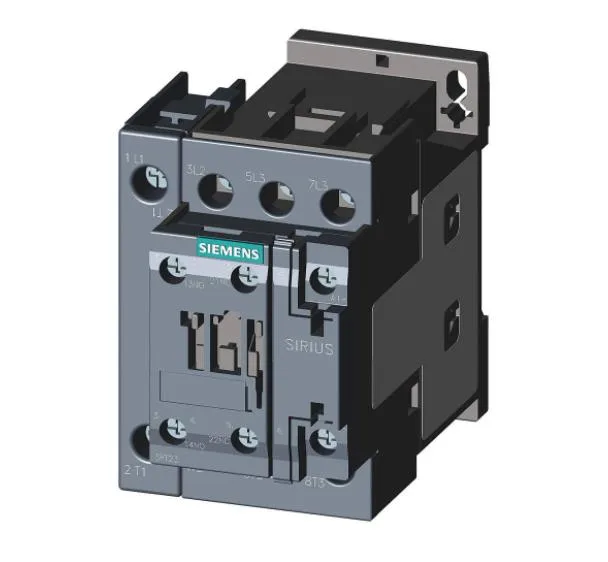
The 3RT2326-2BB40: This is a Siemens SIRIUS Size S0 contactor with a 24 VDC coil and spring-type terminals on the magnet coil. It is designed for switching motor loads and resistive loads in industrial control panels, mounted via screw or snap-on onto 35 mm DIN rail per DIN EN 60715. The S0 frame size is the compact footprint in the SIRIUS line, fitting into panels where space is at a premium. The contactor carries an auxiliary switch, so it can report its state back to a PLC or safety relay without an add-on block. The auxiliary contact ratings span from 10 A at 24 V DC down to 0.1 A at 600 V, covering pilot duty and low-energy signal switching.
Key Ratings and What They Mean for Fit
The 24 VDC coil is the standard low-voltage DC control supply found in most modern panels. The spring-type terminals on the coil accept solid or stranded wire from 0.5 to 2.5 mm², which is the typical range for control wiring. The main contact terminals accept stranded wire up to 10 mm², sized for motor branch circuits up to the contactor's thermal rating. Mechanical life is rated at 10,000,000 operations typical, which means this contactor will outlast most machines in cyclic duty. The operating temperature range of -25 to +60 °C covers unheated plant floors and warm enclosures alike. Mounting position is flexible: the contactor can be rotated +/-180° on a vertical surface and tilted forward/backward by +/-22.5°. This matters when the panel layout forces an unconventional orientation. Clearance distances are specified: 10 mm upwards, 10 mm forwards, 10 mm downwards, and 6 mm at the side, so you can plan rail spacing and enclosure depth.
Panel Integration Details
Dimensions are 60 mm wide, 102 mm high, and 107 mm deep. The 60 mm width is a standard module size for DIN-rail components, matching the footprint of a typical motor-protective circuit breaker or overload relay. The 107 mm depth means it will fit in a 150 mm deep enclosure with room for wiring behind the rail. The contactor can accept up to two auxiliary contact blocks, allowing expansion of the switching capacity for status feedback or interlocking without a separate relay.
