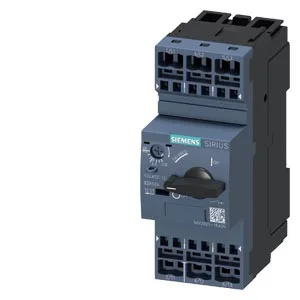
The 3RV2021-1EA20: Trip Class 10 means it will trip within 10 seconds at 7.2× the thermal setting current — fast enough to protect standard induction motors during a locked-rotor event without nuisance tripping on normal startup inrush. That's full-rated SCCR for most industrial panels — no need for upstream current-limiting fuses unless the available fault current exceeds 100 kA. The breaker also includes phase failure detection — if one phase drops out, it trips the motor offline before single-phasing cooks the winding.
Depth is 97 mm, height 119 mm. Any mounting position is allowed. Clearance requirements: 50 mm upwards and downwards, 30 mm at the sides, zero forwards or backwards. That side clearance is tighter than some competing breakers — good for dense panels, but verify if you're stacking multiple units side-by-side without derating. No screw-clamp torque to check — just strip, insert, and the cage clamps. Saves time on the wireman's end of the panel build.
Environmental and duty limits
Maximum switching rate at AC-3 duty (motor starting) is 15 operations per hour. That's typical for a motor-protection breaker — it's not designed for high-cycling jogging or reversing service. If the application needs frequent starts, look at the contactor's rating; the breaker is the backup, not the workhorse.