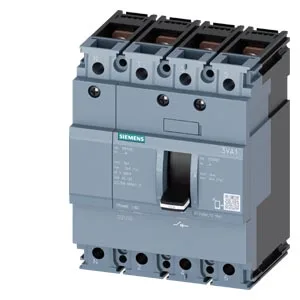
It is a 4-pole unit with a maximum rated operational voltage of 690 V AC at 50/60 Hz and 600 V DC. This part is configured without overload or short-circuit protection, meaning it functions purely as a disconnect switch for isolation and switching under load, not as a circuit breaker protecting downstream conductors. The 125 A rating on a 4-pole frame means this switch disconnector can handle a full three-phase load plus neutral, sized for motor control centers, distribution panels, or as a main disconnect for a sub-panel.
The 3VA1112-1AA42-0AF0 measures 130 mm high, 101.6 mm wide, and 70 mm deep. The 101.6 mm width (4 inches) is the standard 4-pole MCCB footprint for the 3VA1 frame, so it fits existing cutouts and busbar systems designed for that form factor. Front-terminal busbar connection simplifies panel wiring — the main conductors land on the front face, not the rear, which is common for switchboard and panelboard integration. This is standard for indoor panel mounting where the enclosure provides the environmental seal.
Auxiliary Contacts and Switching Capability
The auxiliary switch signals the open/closed position of the main contacts; the trip alarm switch signals when the switch has been tripped (mechanically or electrically). This is useful for remote status monitoring in a PLC or SCADA system — the trip alarm can trigger a maintenance alert without needing to walk the panel. The switch disconnector has a mechanical endurance of 15,000 operating cycles. That is a solid figure for a disconnect used for infrequent isolation (daily or weekly switching), but not for high-cycle applications like a motor starter contactor. For frequent switching, a contactor with higher mechanical life would be the correct choice.