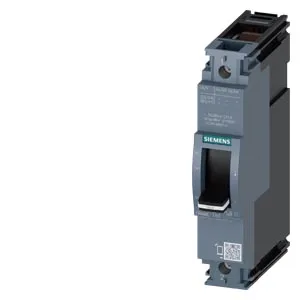
What this 3VA1 breaker carries
The Siemens 3VA1163-3ED32-0DH0 is a 3-pole IEC circuit breaker from the 3VA1 frame-160 series, rated 63 A with a fixed thermal-magnetic TM210 trip unit. The overload protection Ir is fixed at 63 A, and the short-circuit pickup Ii is fixed at 10 x In (630 A). That means no adjustment dials on the trip unit; what you see on the nameplate is what the breaker does. These are factory-fitted accessories inside the 3VA1 accessory slot — no field wiring guesswork for the UVR coil or the signal contacts. The nut keeper kit is also included, so the breaker lands on the busbars ready to torque.
The fixed Ii of 10 x In (630 A) means magnetic trips happen fast on hard shorts, but the breaker won't nuisance-trip on motor inrush if the motor FLA plus locked-rotor stays under 630 A. For a 63 A feeder feeding a group of smaller loads, that's usually fine; for a single large motor, check the starting curve against the TM210's time-delay band.
Integration notes for the panel builder
The 3VA1 frame-160 mounts on standard DIN rail or can be bolted to a mounting plate. That's by design for safety circuits (loss of control power = open breaker). The two auxiliary switches give you one N/O + one N/C changeover each; the trip alarm switch signals only on a fault trip, not on manual open. Wire the UVR ahead of the breaker's line side so it stays powered when the breaker is off.